

Nvidia just shifted the baseline for video game graphics. DLSS 5 moves past simple image reconstruction and introduces a true AI-driven rendering pipeline. This new iteration uses generative artificial intelligence to add photorealistic details directly into a game frame in real time. We break down exactly how this updated version works, the hardware you need to run it, and which titles support these massive visual upgrades. Keeping up with these sudden shifts in rendering tech requires following reliable gaming industry news outlets.
Moving Past Simple Upscaling
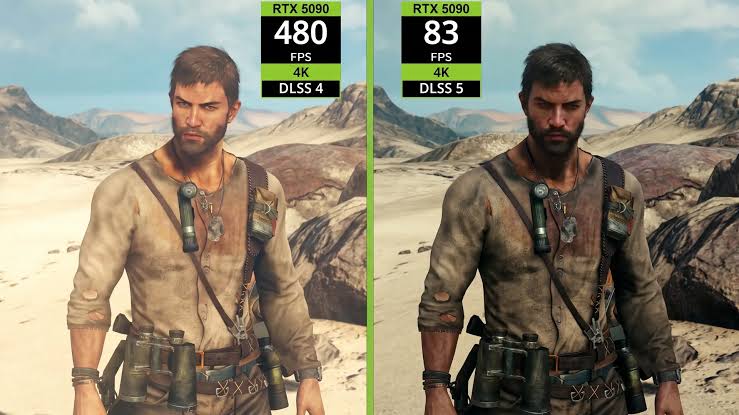
Older versions of Deep Learning Super Sampling focused on generating higher resolutions from lower-resolution inputs to save processing time. DLSS 5 changes the formula entirely. Nvidia calls this new system “3D-Guided Neural Rendering”. Instead of just guessing what a higher-resolution pixel looks like, the software uses a one-step pixel-space diffusion model to generate final scene appearances.
This approach injects real-world physical properties into the game engine. Things like subsurface light scattering through human skin or accurate sunlight beaming through a dense forest canopy become possible without crippling your framerate. The AI model takes the raw color and motion data from the game engine and adds Hollywood-level visual effects directly on top. You can review the complete technical breakdown of this process in Nvidia’s official DLSS 5 announcement.
Balancing Artistic Vision with AI Generation
A major concern with generative AI in video games involves preserving the developer’s original artistic style. If an AI model automatically forces everything to look hyper-realistic, highly stylized games lose their visual identity. Nvidia built specific artistic controls directly into the DLSS 5 framework. Developers determine exactly how strong the neural rendering effect gets. They can even mask off specific areas of a level, telling the AI to leave certain objects completely untouched.
| Feature Update | How It Changes Gameplay |
| Generative Rendering | Injects realistic lighting and textures without heavy engine calculations. |
| Developer Controls | Lets studios protect their original art style while using AI tools. |
| One-Step Diffusion | Maintains high framerates at 4K resolution using new AI models. |
Strict Hardware Requirements for the 50-Series
Running a generative diffusion model in real time takes an immense amount of calculation speed. This heavy demand keeps DLSS 5 completely exclusive to the new RTX 50-Series graphics cards. The specialized Tensor Cores inside these newer GPUs handle the localized AI generation.
Players currently running 40-Series or 30-Series cards miss out on this specific iteration. Upgrading your entire rig requires a serious financial commitment, making early performance benchmarks critical for consumers. Many PC builders debate whether the visual jump justifies buying early into a new GPU generation. Critics reading PCWorld’s coverage on the technology frequently argue about the trade-offs between pure performance and AI-generated realism.
Early Launch Titles and Future Support
Nvidia partnered with several massive publishers to push this technology immediately. Visual Concepts integrated DLSS 5 into NBA 2K27, letting the neural renderer handle incredibly realistic sweat and skin textures on the players. Other massive upcoming titles confirming support include Assassin’s Creed Shadows, Starfield, Hogwarts Legacy, and Resident Evil Requiem.
As more developers gain access to these tools, the baseline for visual fidelity will jump higher. The 50-Series cards now act as a platform for real-time generative rendering, changing how studios approach hardware limits.