
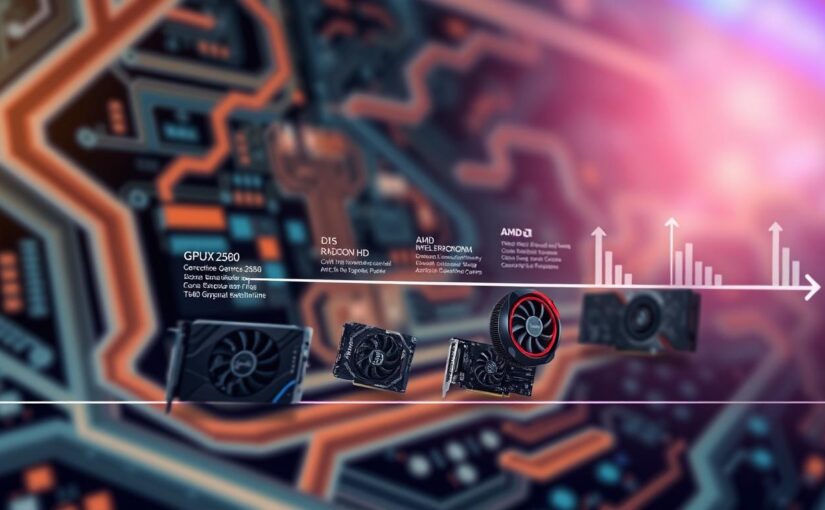
Let’s go back in time. Do you remember when a graphics card was only for graphics?
The GPU’s journey from simple graphics to powerful computing is a fascinating story. It was not magic, but a bold architectural move.
In 2006, Nvidia faced a big problem. The rendering APIs were getting too complex. So, they decided to break their own rules.
The result was the Tesla architecture (G80). It was more than a new chip; it was a new way of thinking.
The old system of vertex and fragment units was gone. In came the Stream Multiprocessor (SM). This unified approach changed everything.
It made load balancing automatic and opened up parallel programming. From Tesla to Blackwell, we’ve seen huge progress.
This journey is full of big leaps, not small steps. That one bold move started the AI revolution and changed how we compute today.
Introduction to CUDA
CUDA, or Compute Unified Device Architecture, is a key technology developed by NVIDIA. It allows developers to tap into the power of NVIDIA GPUs for general computing tasks. This technology is essential for accelerating various applications, from scientific simulations to data analytics.
What is CUDA?
CUDA is a programming model that enables developers to leverage the parallel processing capabilities of NVIDIA GPUs. It provides a set of tools and libraries that simplify the process of writing efficient GPU code. This architecture is designed to handle complex computations, making it a cornerstone in the field of high-performance computing.
History of CUDA
The history of CUDA began with NVIDIA’s introduction of the GeForce 8800 GTX in 2006. This GPU was the first to support CUDA, marking a significant shift in the way graphics processing units (GPUs) were used. Initially, CUDA focused on graphics processing, but it quickly evolved to support general-purpose computing on GPUs (GPGPU). Over the years, CUDA has become a standard in the field, with numerous applications across various industries.
Key Features of CUDA
CUDA architecture is renowned for its ability to handle massive parallelism, making it a powerful tool for high-performance computing. Key features include:
- Massive Parallelism: CUDA supports thousands of threads running concurrently, which is essential for complex computations.
- Memory Management: CUDA provides efficient memory management tools, ensuring optimal performance and minimizing memory access latency.
- Optimized Libraries: CUDA offers a range of optimized libraries for various applications, from scientific simulations to data analytics.
These features make CUDA a vital component in the field of high-performance computing, enabling developers to achieve remarkable performance gains in their applications.
What’s New in 2024
March 2024 was a big moment for Nvidia. They launched the Blackwell architecture, marking a new era in computing. It’s not just a small update; it’s a major change in how we think about computing.
So, what does Blackwell mean? It’s a mix of Nvidia’s past successes. Hopper focused on AI, Ada Lovelace on ray tracing. Blackwell aims to do both well, making real-time path tracing common.
Blackwell brings big improvements in a few areas. First, it boosts interconnect bandwidth. This is key for handling large AI tasks. Blackwell’s new design makes PCIe look slow by comparison.
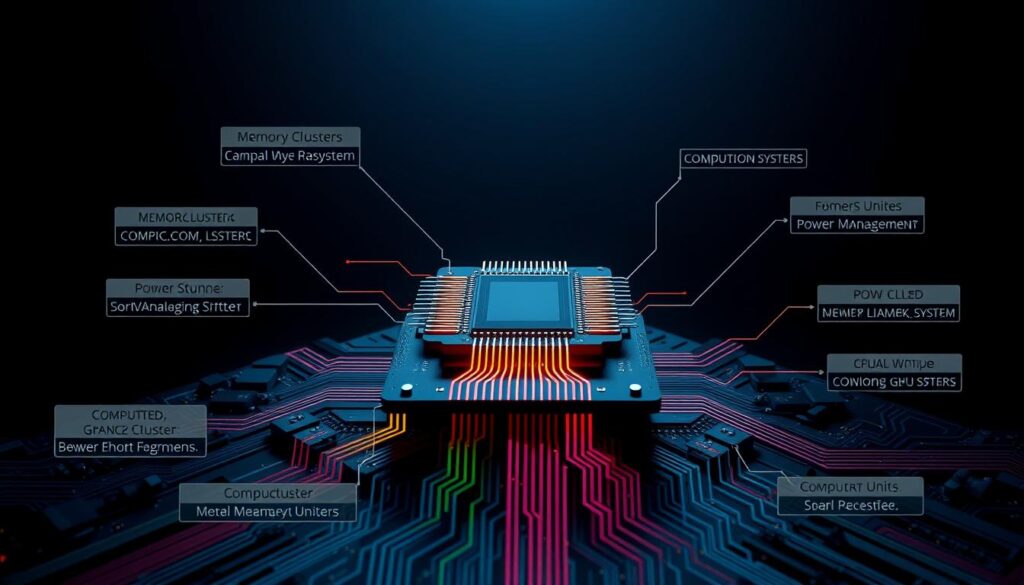
Second, the Tensor Cores get a major upgrade. It’s not just about more power. It’s about being ready for the large language model race. Think of it as the GPU getting smarter, while your old card is catching up.
Lastly, the memory subsystems get a big update. Your current VRAM is slow compared to what’s coming. It’s about speed, efficiency, and how data moves between the GPU and the system.
For gaming GPUs, the changes are deep. We move from asking “how many frames?” to “what visuals were impossible before?”
Nvidia isn’t alone in this race. AMD and Intel are working on their own tech. 2024 is a battle for the best architecture.
The table below shows the next big leap in visuals.
| Architecture | Company | Key Innovation | Expected Gaming Impact |
|---|---|---|---|
| Blackwell | Nvidia | Next-Gen NVLink & AI Tensor Cores | Real-Time Path Tracing Becomes Standard |
| RDNA 4 (Rumored) | AMD | Infinity Cache 2.0 & Ray Tracing Uplift | Higher FPS at 4K, More Affordable Ray Tracing |
| Battlemage | Intel | Xe-Core Redesign & Driver Maturity | Serious Mid-Range Contender, Better Price-to-Performance |
| Next-Gen Hopper | Nvidia (Data Center) | Transformer Engine & HBM3e Memory | Trickle-Down Tech for Future GeForce RTX 60 Series |
2024 is a big year for GPUs. They’re no longer just for graphics. They’re smart co-processors for new worlds. It’s a chance for hardware to catch up with software dreams. And for gamers, it’s going to be very exciting.
What is CUDA?
CUDA stands for Compute Unified Device Architecture. It is a parallel computing platform developed by NVIDIA. CUDA allows developers to use NVIDIA GPUs for general-purpose computing, not just graphics.
With CUDA, developers can tap into the massive parallel processing capabilities of NVIDIA GPUs. This enables them to perform complex computations and accelerate various tasks, such as scientific simulations, data analytics, and machine learning.
CUDA provides a set of tools and libraries that make it easier for developers to write parallel code for NVIDIA GPUs. It includes a compiler, runtime libraries, and APIs that allow developers to leverage the power of GPUs for their applications.
By utilizing CUDA, developers can achieve significant performance improvements compared to traditional CPU-based solutions. This is because GPUs have thousands of cores, allowing for massive parallel processing and faster execution of tasks.
Whether you’re working on scientific simulations, data analytics, or machine learning projects, CUDA can help you unlock the full power of NVIDIA GPUs. With CUDA, you can accelerate your workflows, reduce processing times, and achieve better results.
So, what exactly is CUDA? It’s a powerful platform that enables developers to harness the parallel processing capabilities of NVIDIA GPUs for general-purpose computing. By leveraging CUDA, you can unlock the full power of your NVIDIA GPU and achieve remarkable performance improvements in your applications.
Benefits of Using CUDA
Using CUDA offers several benefits for developers and researchers:
- Improved Performance: CUDA allows you to tap into the massive parallel processing capabilities of NVIDIA GPUs, resulting in faster execution of tasks and improved performance.
- Accelerated Workflows: By leveraging CUDA, you can accelerate your workflows and reduce processing times, allowing you to focus on more complex tasks and deliver results faster.
- Enhanced Accuracy: CUDA’s parallel processing capabilities can improve the accuracy of scientific simulations, data analytics, and machine learning models, enabling you to make more informed decisions.
- Increased Productivity: With CUDA, you can optimize your workflows and reduce the time spent on processing tasks, allowing you to focus on more creative and strategic aspects of your work.
By utilizing CUDA, you can unlock the full power of NVIDIA GPUs and achieve remarkable performance improvements in your applications.
Exploring the World of GPU Tech
GPU tech has become a cornerstone in the digital world, revolutionizing how we process and visualize data. From gaming to scientific simulations, the role of graphics cards is more critical than ever. Let’s dive into the fascinating realm of GPU tech and explore its applications.
What is GPU Tech?
GPU tech refers to the technology and innovations surrounding graphics processing units (GPUs). These powerful chips are designed to handle complex graphics and data processing tasks. They are essential for applications ranging from gaming to scientific simulations, making them a vital part of modern computing.
Applications of GPU Tech
The applications of GPU tech are vast and diverse. Here are a few key areas where GPUs make a significant impact:
- Gaming: GPUs are the backbone of the gaming industry, providing high-performance graphics and smooth gameplay.
- Scientific Simulations: GPUs are used in various scientific fields, such as climate modeling, medical imaging, and fluid dynamics, to accelerate complex simulations.
- Artificial Intelligence: GPUs are instrumental in AI applications, including deep learning, neural networks, and machine learning algorithms.
- Virtual Reality: GPUs enable immersive VR experiences by rendering high-quality graphics and handling complex calculations.
These are just a few examples of the many applications of GPU tech. The versatility and power of graphics cards make them an indispensable tool in today’s digital landscape.
As we continue to push the boundaries of technology, the importance of GPU tech will only grow. From gaming to scientific simulations, the role of graphics cards in shaping our digital world is undeniable.
Benchmarks
If GPU architectures are like symphonies, then benchmarks are the reviews that tell us who’s the real Mozart. They show if a GPU lives up to its promise. But, there’s no one test that tells the whole story. It’s like judging a chef by just their ability to boil water.
For older gaming GPUs, raw rasterization is key. It shows how well the GPU can handle basic tasks. But today’s architecture is more complex. You need different tests for different tasks.
AI training performance is a different story. It’s all about Tensor Cores. The V100 could do 512 FP16 FMA ops per clock per SM. The A100 doubled that to 1024. That’s a huge leap forward.
Memory bandwidth is like the highway system for data. HBM2e had 1555 GB/s. HBM3 is even faster at 4000 GB/s. This means better 4K gaming in many cases. But only certain benchmarks will show it.
Ray tracing performance is another area to consider. It’s where NVIDIA’s RT Cores shine. A card might do well in rasterization but struggle with ray tracing. The gaming GPUs hierarchy shows these differences.
Cache latency tells us about the GPU’s design. GPU L2 cache is slower than CPU L3 cache. This is because they’re designed for different tasks. Benchmarks that focus on cache-sensitive tasks will highlight this.
So, what’s the best approach? Benchmark triage. Choose the right test for the task:
- Traditional gaming: Look at rasterization scores at your target resolution
- AI/creative work: Tensor Core performance and memory bandwidth are key
- Ray-traced games: RT Core benchmarks are most important
- Professional workloads: Cache size and latency matter most
Numbers don’t lie, but they don’t always tell the whole story. A GPU might excel in one area but not another. This is because modern architecture makes trade-offs. Benchmarks just show what was chosen.
When you see a new card reviewed, don’t just look at the score. Understand the story behind it. Was the memory bandwidth leap the hero? Did a big L2 cache crush a specific workload? This way, raw data becomes real insight.
Ultimately, benchmarks help us make informed choices, not just argue. They show which architecture is best for our needs. The best GPU isn’t the one with the highest score. It’s the one that fits our demands.
What is CUDA?
CUDA stands for Compute Unified Device Architecture. It is a parallel computing platform developed by NVIDIA. CUDA allows developers to use NVIDIA graphics cards to perform complex calculations and tasks.
With CUDA, developers can tap into the massive parallel processing capabilities of NVIDIA graphics cards. This enables them to accelerate their applications and achieve faster results. CUDA is widely used in fields such as scientific research, artificial intelligence, and data analytics.
By leveraging the power of CUDA, developers can unlock the full capabilities of NVIDIA graphics cards. This allows for faster processing, improved performance, and enhanced efficiency in various applications.
Whether you’re working on a project that requires intense computational power or you’re developing a high-performance application, CUDA can help you achieve your goals. Its ability to harness the parallel processing capabilities of NVIDIA graphics cards makes it a valuable tool for developers.
Next, we will explore the benefits of using CUDA and how it can enhance your applications.

Benefits of Using CUDA
Using CUDA offers several benefits for developers and applications. Here are some of the key advantages:
- Improved Performance: CUDA enables developers to leverage the massive parallel processing capabilities of NVIDIA graphics cards. This results in faster processing, improved performance, and enhanced efficiency in various applications.
- Accelerated Calculations: CUDA allows developers to offload complex calculations from the CPU to the GPU. This reduces the computational load on the CPU and accelerates the overall processing time.
- Enhanced Efficiency: By utilizing the parallel processing capabilities of NVIDIA graphics cards, CUDA helps developers optimize their applications for better performance and efficiency.
- Support for Various Applications: CUDA supports a wide range of applications, including scientific research, artificial intelligence, data analytics, and more. It provides a versatile platform for developers to accelerate their applications.
By leveraging the power of CUDA, developers can unlock the full capabilities of NVIDIA graphics cards and achieve faster, more efficient results in their applications.
What is a GPU Tech?
A GPU tech, or Graphics Processing Unit technology, is a key component in modern computing. It’s designed to handle graphics and compute tasks efficiently. This technology is essential for both gaming and professional applications.
Definition and Functionality
GPU tech is a specialized chip that focuses on graphics processing. It’s different from the CPU, which handles general computing tasks. The GPU is built to perform complex graphics and compute tasks, making it vital for gaming GPUs and professional applications.
Importance in Computing
The importance of GPU tech in computing cannot be overstated. It’s a critical component for high-performance computing, enabling tasks like 3D modeling, video editing, and scientific simulations. The advancements in GPU tech have significantly improved performance, making it a cornerstone in the tech industry.