

AI gaming technology has moved past the demo-stage conversation and into the games players are buying, reviewing, and questioning on PC storefronts. The clearest sign is Steam’s disclosure system. Between January and November 2025, about 1 in 5 newly released Steam games disclosed generative AI use, after Steam added an AI disclosure field in January 2024; the same report said 7,818 titles had disclosed generative AI asset usage, about 7% of Steam’s roughly 114,000-game library Tom’s Hardware reported. That does not mean every AI-tagged game used the tech in the same way, or that every use case affected quality. It does mean AI is now visible enough that PC players, reviewers, and storefronts have to treat it as part of the buying decision.
For a gaming-hardware audience, the useful question is not whether AI is good or bad in the abstract. It is where the tech touches the player: asset creation, code support, player-behavior analysis, NPC systems, moderation, store presentation, and possibly local workloads on the gaming PC. Some of those uses are invisible to the player. Some can change how a game feels. Some can raise trust issues before a player even reaches the settings menu.
Why AI Gaming Technology Is Visible On Steam
AI Gaming Technology Disclosure Matters
Steam’s AI disclosure field gave players a clearer marker than rumor threads or post-launch accusations. A store-page disclosure is not a full production diary, but it helps set expectations. If a game discloses generated art, text, audio, or other assets, players can decide whether that affects their interest. If a game does not disclose AI use, the absence of a label should not be treated as proof that none exists, because the research only covers titles that disclosed use through the platform system.
This is where AI gaming technology becomes a review issue as much as a development issue. A PC game can be judged on frame pacing, input feel, options menus, ultrawide support, controller behavior, and shader compilation. AI disclosure adds another layer: did the use of AI appear to reduce craft, create repetition, or introduce visible errors? Or was it limited to production support that players may never notice? The disclosure alone is not a verdict.
What The Steam Numbers Do And Do Not Prove
The 2025 Steam numbers show adoption, not quality. A disclosed AI tool could have been used for concept drafting, temporary placeholder work, localization support, marketing copy, code assistance, or finished in-game assets. Those are different things. A small studio using AI to speed up internal testing is not the same as a game shipping obvious generated art that clashes with its own style.
That distinction matters for PC players because the storefront has become crowded. Steam’s library size makes discovery hard, and a visible AI disclosure may become a quick filter for some buyers. Others may ignore the label if the game is polished, fairly priced, and clear about what was made by people. The pressure is on developers to communicate plainly, because vague disclosure can make a player suspect the worst even when the actual use was limited.
Why Developers Are Using AI Behind The Scenes
Japanese Online Game Studios Show The Back-End Shift
The most player-relevant AI use may not be art generation at all. On July 10, 2026, the JOGA Online Game Market Research Report revealed that 100% of surveyed Japanese online game companies used generative AI tools, with the main use cases centered on user preference analysis and player behavior prediction PC Gamer reported. That is a different kind of adoption from asset creation, and it reaches into live-service design, retention analysis, and how publishers understand what players do inside a game.
For players, this part is less visible than a generated character portrait, but it may be more sensitive. Behavior prediction can help a studio understand confusing onboarding, difficulty spikes, or where players quit. It can also make players wary if it feels tied to pressure tactics, aggressive prompts, or spending nudges. The research cited here does not prove those outcomes; it only shows what the surveyed companies said they used AI for. The consumer question is still fair: will analytics improve games, or will it mainly sharpen monetization design?
Player Behavior Prediction Needs Scrutiny
Online games already collect data, and AI gives studios another way to sort that data. The problem is that players rarely see the model, the dataset, or the design meetings that follow. A balance patch can be explained in patch notes. A matchmaking shift can be felt by the community. A behavior model is harder to inspect.
That is why disclosure should not stop at asset labels. If a publisher is using AI-assisted analysis to change progression, rewards, store offers, or engagement loops, players deserve clear communication in plain language. Not every analytics tool is hostile to players, and not every AI-supported decision is a cash-shop decision. Still, player trust is fragile, especially after years of frustration around battle passes, rotating shops, premium currencies, and grind pacing.
What This Means For PC Players And Hardware
Local Features Could Change Review Testing
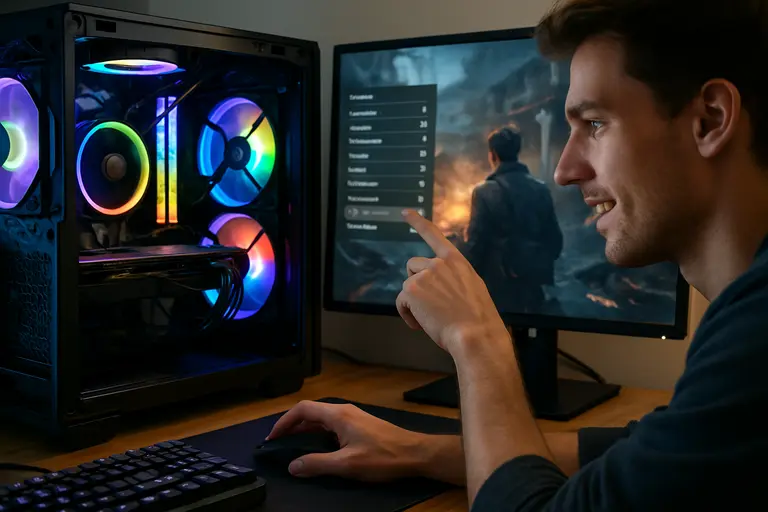
Most of the verified adoption numbers in the research are about development practice and storefront disclosure, not PC performance. That limits what anyone should claim about hardware requirements. It would be careless to say AI-heavy games will automatically demand a specific GPU, CPU, or NPU. The supported fact is simpler: more games and studios are disclosing or reporting AI use, and that may force reviewers to ask better questions.
If future PC games run more AI-driven features locally, reviews will need to separate normal rendering load from AI-related load. That means checking frame-time stability, CPU spikes, VRAM use, latency, offline behavior, and whether settings allow players to disable features they do not want. Until a specific game ships with measured behavior, no one should promise a performance gain or warn of a guaranteed hit.
Disclosures Should Shape Buying Advice
Buying advice should stay practical. A Steam AI disclosure should not be an instant rejection, but it should prompt a closer read of user reviews, developer notes, and media coverage. If players report repetitive text, mismatched art, weak voice work, or strange quest logic, the label may help explain the concern. If players praise the game’s design, stability, and value, the label may matter less.
PC players should treat AI gaming technology like any other production choice: judge the result, then judge the business practice around it. A game that uses AI transparently, prices itself fairly, and ships in good shape deserves a different conversation from a game that feels rushed and hides behind broad wording. For wider community reads across gaming culture and adjacent coverage, the network also includes Hexiled Gaming, which provides additional insights and reviews.
- Check the Steam disclosure, but do not treat it as a full explanation of how the game was made.
- Read recent user reviews for repeated complaints about generated assets, weak writing, or broken content.
- Watch for AI use tied to player behavior, rewards, progression, or store offers.
- Wait for PC performance testing before assuming local AI features need new hardware.
AI Gaming Technology And Player Trust
The next phase of AI gaming technology will be judged less by tool demos and more by shipped games. Players care about feel, fairness, performance, art direction, writing, stability, and price. If AI helps a studio polish rough edges without reducing authorship or clarity, many players may accept it. If it becomes a shortcut for lower-effort content, vague disclosure, or more aggressive engagement systems, the backlash will be earned.
The 2025 Steam disclosure figures and the July 2026 Japanese online-game survey point in the same direction: AI is already part of game production and operations. The open question is how honestly studios explain it and how carefully reviewers test the finished work. For PC players, the smart position is skeptical but not automatic. Ask what was made, how it was used, whether the game respects your time and money, and whether the PC version runs well on real hardware. That is the standard AI will have to meet.