
Amazon Luna streaming has changed from a mixed store-and-subscription cloud service into a Prime-led library play, and that makes its comparison with Xbox Cloud Gaming much sharper on September 22, 2026. Luna now looks less like a place to buy cloud access to individual games and more like a bundled entertainment perk. Xbox Cloud Gaming, by contrast, remains tied to the wider Game Pass ecosystem, but Microsoft’s November 2026 hour limits will make heavy cloud play a more measured decision.
The practical question for gamers is not which service sounds bigger on a marketing page. It is which one fits how you actually play. If you mainly want casual access from a TV, a controller, or a phone, Luna’s Prime integration may be enough. If you want a stronger link to owned games, Game Pass titles, and Microsoft’s wider Xbox library strategy, Xbox Cloud Gaming still has a clear pull. The catch is that Xbox is moving toward capped cloud time, while Luna has already cut away older purchase and third-party store features.
Why Amazon Luna Streaming Changed In 2026
Amazon Luna Streaming Is No Longer A Store
The biggest Luna change already happened. Amazon discontinued individual game purchases, third-party store access, and third-party subscriptions on Luna starting April 10, 2026. Players who had eligible purchases or active third-party subscriptions before that date could keep playing until June 10, 2026, after which streaming access to those purchased third-party games was removed, as reported by PC Gamer.
That change matters because it resets the ownership expectation. Luna is no longer the service you pick because you want a cloud version of a separate game store. It is now easier to understand as a rotating, curated library attached to Amazon Prime, with Luna Premium still positioned as the paid expansion tier. That may suit players who already pay for Prime and want a low-friction way to sample games, but it is weaker for anyone who treated Luna as a long-term access point for purchased titles.
Prime Makes Luna Simpler, But Also Narrower
Prime members now get access to Luna Standard, with research notes pointing to more than 50 titles as part of the benefit. Luna Premium adds a broader library, with examples in the research including larger releases such as EA SPORTS FC 25, Star Wars Jedi: Survivor, and Batman: Arkham Knight. Luna also includes GameNight for Prime members, a party-friendly feature with more than 25 approachable games, including some that can use phones as controllers.
That is a cleaner pitch than old Luna, but it is also a narrower one. The service is not trying to match a console storefront feature for feature. It is trying to make cloud gaming feel like another part of a Prime household. That helps casual players, families, and people who do not want another gaming subscription just to try cloud play. It does not replace a PC library, a console backlog, or a local machine for players who care about ownership, mod support, high-end visuals, or guaranteed access to a specific title.
Xbox Cloud Gaming Is Moving Toward Metered Play
November 2026 Changes The Value Math
Xbox Cloud Gaming is headed in the opposite direction from Luna in one key area: it is adding clearer usage limits. Beginning in November 2026, based on the research notes, Game Pass subscriptions are scheduled to include monthly cloud gaming hour limits. Ultimate is listed at 15 hours per month, Premium at 10 hours per month, and Essential at 5 hours per month. After those included hours are used, subscribers will be able to buy extra cloud playtime through the Xbox Store. The comparison point is covered in MADX Gaming’s 2026 cloud gaming comparison, which frames Luna, Xbox Cloud Gaming, and GeForce Now as very different service models.
As of September 22, 2026, those Xbox limits had not yet taken effect, so players should treat them as a scheduled November policy rather than the live state of the service. That timing matters. A player evaluating Game Pass today still has a short window before the new cloud-use model begins, but buying into a subscription for cloud-first play without accounting for the November shift would be a mistake.
Owned Games Streaming Is The Xbox Counterpunch
The same November 2026 plan also includes an important Xbox advantage: users without Game Pass are set to be able to stream eligible games they already own, using purchased cloud-playtime hours. For players with a long Xbox library, that could be more attractive than a pure subscription catalog. It moves Xbox Cloud Gaming closer to a service layer for games you already have, not just a bonus attached to a subscription.
That is where the services split most clearly. Luna removed the old purchased-game path. Xbox is preparing to expand owned-game streaming, but with paid cloud time wrapped around it. Neither model is perfect. Luna is simpler if you accept the Prime catalog. Xbox is more flexible for some libraries, but heavier users may have to watch their monthly hours or pay more.
Library Access And Ownership Are The Real Split
Casual Access Versus Library Continuity
The strongest argument for Amazon Luna streaming is convenience for existing Prime households. You do not need to think like a PC builder, buy a GPU, or set up a console in another room. You just need a supported device, a suitable controller setup, and a connection good enough for cloud play. For casual sessions, party games, and trying titles without installing huge downloads, that is a useful role.
Xbox Cloud Gaming is better framed as part of Microsoft’s larger gaming account system. Game Pass library access, eligible owned games, console ties, and the broader Xbox Store make it feel more connected to a serious gaming library. That does not mean it is the better pick for every player. It means the appeal is different: Xbox is selling continuity across devices, while Luna is selling easy access inside the Amazon ecosystem.
| Area | Luna | Xbox Cloud Gaming |
|---|---|---|
| Core Model | Prime library plus paid Premium tier | Game Pass tiers plus owned-game streaming plan |
| Purchases | Individual purchases and third-party store access ended in 2026 | Eligible owned-game streaming scheduled for November 2026 |
| Cloud Hours | No explicit monthly hour cap in the research notes | Monthly limits scheduled for Game Pass tiers in November 2026 |
| Best Fit | Prime users, party games, casual play | Xbox library users, Game Pass players, device switching |
Do Not Treat Cloud Gaming Like Ownership
Luna’s 2026 change is a reminder that cloud access can disappear when a service model changes. That does not make cloud gaming bad, but it does mean players should separate convenience from ownership. If a game matters to you long term, local access on PC or console is still easier to reason about than a rotating cloud entitlement.
Xbox’s November plan does not erase that concern. Owned-game streaming sounds stronger for continuity, but it is still tied to eligibility, cloud availability, account status, and paid playtime after included hours. A disc, download, or local PC install remains a different kind of control.
What This Means For Living-Room And PC Setups
Cloud Play Is A Setup Choice, Not A Hardware Replacement
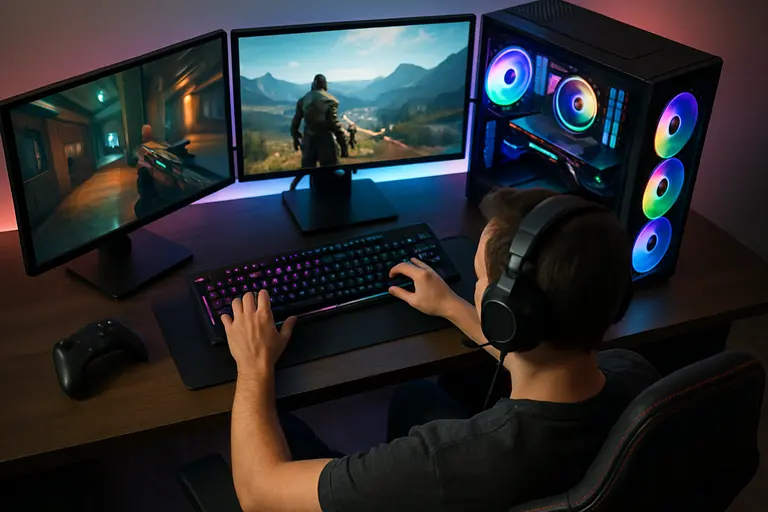
For Cooler Master Gaming readers, the cloud-gaming angle connects directly to setup planning. A player who spends most time in competitive shooters, modded PC games, sim titles, or high-refresh monitor play should not expect any cloud service to replace a tuned local rig. Cloud gaming quality depends on connection stability, server distance, device support, controller input, and the game itself. No service can promise the same feel for every home network.
Where cloud services make sense is in the secondary setup. A Fire TV-style living-room device, a spare display, a tablet, or a low-power laptop can become a casual gaming station without a full desktop build. That is why the hardware angle is not dead; it just changes. You may still care about Wi-Fi quality, Ethernet access, controller latency, display mode, and whether the room is set up for quick sessions.
Heavy Players Should Count Hours Before Counting Savings
If you play a few cloud sessions a month, Xbox’s scheduled November caps may not bother you. Microsoft’s research-note estimate says the new monthly limits would affect around 4% of Game Pass subscribers, mostly heavier cloud users. If you rely on cloud gaming as your main way to play, those caps become central. Fifteen hours can disappear quickly across role-playing games, sports seasons, open-world play, or long weekend sessions.
Luna avoids that specific hour-cap concern in the research available here, but its catalog is the tradeoff. The question is whether the games you want are inside the Luna library at the time you want to play. If not, unlimited access to the wrong catalog is not useful. That is also why our related analysis on Amazon Luna and hardware pricing treated cloud gaming as a value pressure valve, not a universal answer.
- Choose Luna if you already pay for Prime and want easy library access without buying cloud play hours.
- Choose Xbox Cloud Gaming if Game Pass, eligible owned games, and Xbox account continuity matter more than unlimited session time.
- Keep a local PC or console plan if you care about long-term access, competitive latency, mods, or specific performance targets.
For more in-depth analysis on these trends, GameCloud Network offers comprehensive insights into cloud access, subscriptions, and varied gaming strategies.
Amazon Luna Streaming Vs Xbox Cloud Gaming In 2026
Amazon Luna streaming now makes the most sense as a Prime benefit with an optional Premium upgrade. It is cleaner than the older Luna model, but less useful for players who wanted cloud access to purchased third-party games. Xbox Cloud Gaming is moving toward a more controlled usage model in November 2026, with monthly hour limits for Game Pass tiers and paid extra time after that. Its counterweight is the planned ability for non-Game Pass users to stream eligible owned games through paid cloud playtime.
For light players, the choice may be simple: use the service already tied to the subscription you pay for. For heavy cloud users, the decision needs more math. Count your monthly hours, check whether your preferred games are actually available, and decide whether cloud play is your main platform or a backup option. Amazon Luna streaming wins on Prime convenience. Xbox wins on account-library logic. Neither replaces the control of local hardware, and neither should be treated as permanent access to every game you care about.