

The 2026 PC gaming market is facing an unusual upgrade problem: the next major performance improvement may depend less on GPU power and more on whether memory components remain affordable. Rising costs across RAM, SSDs, and graphics memory are changing how gamers think about new builds, upgrades, and replacement cycles. Valve’s Steam Machine launch became one of the clearest examples of this pressure, with company engineers warning that memory shortages were affecting hardware costs and availability. PC Gamer’s memory crisis report explains that Valve engineers Yazan Aldehayyat and Pierre-Loup Griffais linked higher hardware costs to ongoing memory supply constraints.
For Cooler Master Gaming readers, this shift changes the meaning of a “good upgrade.” A few years ago, gamers could often focus on the graphics card first and replace other components later. In 2026, the smarter build strategy may involve balancing RAM capacity, SSD planning, GPU memory, cooling, and case longevity before buying a single expensive part.
This trend connects directly with earlier Cooler Master Gaming coverage of Valve’s 2026 Steam Machine analysis, where compact hardware value depended on more than processor performance. The same principle applies across desktop builds: component prices, thermal design, and upgrade flexibility determine whether a system remains useful several years after purchase.
Why Memory Has Become The Hidden Cost Behind Gaming Builds
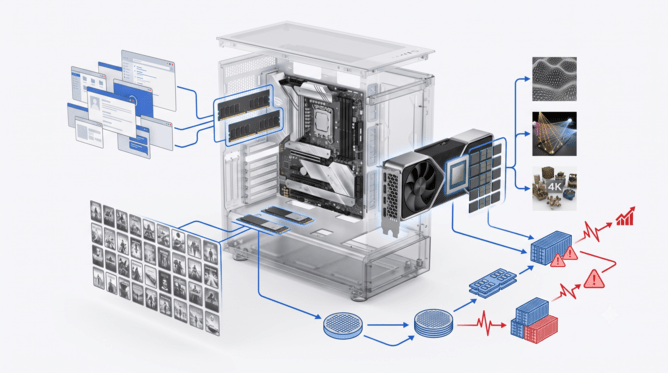
Memory shortages are changing PC hardware decisions because modern gaming systems depend on several types of memory at the same time. Traditional system RAM affects multitasking and game loading behavior. SSD storage affects library size and installation flexibility. GPU memory affects texture quality, resolution targets, ray tracing workloads, and future game compatibility.
The pressure is especially visible in graphics cards. Nvidia’s RTX 50-series generation introduced GDDR7 memory as a major part of its performance strategy, giving newer GPUs higher bandwidth potential than previous generations. Yet reports around the rumored RTX 50 Super refresh suggest that memory supply could become the limiting factor. Tom’s Hardware reported that RTX 5080 Super, RTX 5070 Ti Super, RTX 5070 Super, and RTX 5050 9GB models were reportedly affected by the cost of 3GB GDDR7 modules, which were described as significantly more expensive than 2GB versions.
That creates a difficult situation for gamers. More VRAM is attractive because modern games continue demanding more memory headroom. A graphics card with additional VRAM can age better at higher resolutions and demanding settings. Yet the same memory technology that improves the card can make the final product harder to afford.
The result is a market where buyers cannot evaluate GPUs only by frame-rate charts. The question becomes: how much memory does the card have, how much will that memory cost, and how long will the entire system remain balanced?
How RAM Pricing Could Change The Way Gamers Build PCs
System RAM has traditionally been one of the easier upgrades. Adding memory was often cheaper than replacing a CPU or GPU, and many gamers treated RAM as a simple capacity decision. That approach is becoming less predictable as memory demand expands across consumer PCs, servers, and AI-related hardware.
Valve’s Steam Machine situation shows how memory pressure can affect finished gaming products. The compact PC was designed around a fixed hardware target, but rising component costs made pricing more difficult. Valve engineers said memory supply conditions were worsening, with retail prices still catching up to broader supply trends.
For gamers building desktops, RAM decisions now require more planning:
| Upgrade Decision | Older Approach | 2026 Consideration |
|---|---|---|
| System RAM | Buy enough now and add later | Check motherboard support and future pricing |
| DDR5 Capacity | 16GB as a common gaming target | 32GB may provide longer comfort for modern workloads |
| Memory Speed | Prioritize advertised speed numbers | Balance speed, latency, price, and availability |
| Upgrade Timing | Wait until performance becomes a problem | Consider buying before prices move higher |
A player building a new gaming PC in 2026 may find that buying adequate RAM at the start is safer than planning a future upgrade. A system built with 32GB can provide more flexibility for gaming, streaming, browser-heavy multitasking, content creation, and background applications.
The challenge is avoiding unnecessary spending. Not every gamer needs workstation-level memory capacity. The goal is to choose a configuration that matches expected use over the next several years.
Why SSD Costs Could Affect Game Libraries

Storage is another area where memory market pressure changes behavior. Modern games continue growing in size, and many players now maintain libraries containing hundreds of titles. A smaller SSD can quickly become restrictive when large installations, updates, and high-resolution game assets compete for space.
The traditional upgrade path was simple: buy a smaller SSD, add another drive later. That strategy becomes less attractive if storage prices rise or availability changes. Gamers may start planning storage capacity earlier instead of treating SSD expansion as a future problem.
This matters most for:
- Players with large Steam, Epic Games Store, Battle.net, or Xbox PC libraries
- Content creators recording gameplay footage
- Streamers maintaining multiple installed titles
- Competitive players who want fast access to several games
- Builders using one PC for gaming and productivity
A premium gaming build is not only about FPS performance. Storage affects how convenient the system feels every day. A fast GPU paired with limited storage can still create frustration when users constantly uninstall and reinstall games.
The 2026 market may encourage gamers to think about SSD capacity the same way they think about power supplies and cooling: as infrastructure that supports future upgrades.
How GPU Memory Pressure Could Change Graphics Card Buying
GPU upgrades are where the memory crisis becomes most visible. Graphics cards have always been the centerpiece of gaming builds, but VRAM capacity is becoming a bigger factor in purchase decisions.
The June 2026 Steam Hardware Survey showed how mainstream hardware remains concentrated around practical configurations. Valve’s data listed the NVIDIA GeForce RTX 4060 Laptop GPU as the most common GPU entry at 3.81%, with 8GB VRAM appearing as the largest VRAM category at 25.64% and 16GB VRAM reaching 24.50%. Steam Hardware Survey video card data
Those numbers reveal an important gap. Many players are still using 8GB-class graphics memory, but higher-capacity configurations are becoming more common. Future games designed around larger textures, advanced lighting, and AI-assisted rendering could increase pressure on lower-memory cards.
This does not mean every gamer needs the most expensive GPU available. It means buyers should match GPU memory to their actual display and game goals.
A 1080p esports-focused system has different needs from a 4K single-player setup. A creator workstation has different requirements from a casual gaming desktop. The best upgrade depends on workload, not only the GPU name.
Why Cooling And Power Planning Matter More During Component Shortages
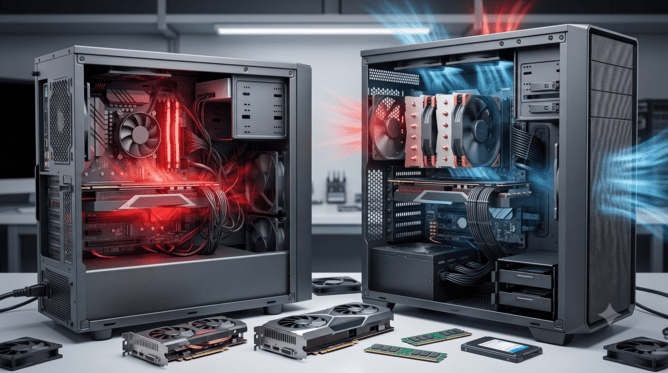
When memory prices rise, gamers often look for ways to save money. The danger is cutting the wrong parts. A cheaper case, weaker power supply, or insufficient cooling solution can limit the value of an expensive GPU upgrade.
This is where Cooler Master’s hardware focus becomes especially relevant. A premium graphics card requires a system that can maintain stable temperatures. Larger GPUs, higher power limits, and more demanding workloads increase the importance of airflow, fan placement, and case design.
The current GPU market already shows how pricing pressure affects premium builds. PC Gamer’s July 2026 graphics card price tracking reported that several Nvidia RTX 50-series cards remained above MSRP, with higher-end models facing continued pricing pressure. The same guide tracked U.S. pricing for cards including RTX 5090, RTX 5080, RTX 5070 Ti, and RTX 5070 models.
A gamer spending more on a GPU may need to keep that card longer. That makes cooling quality more important. A well-designed case can extend the useful life of a system by supporting future hardware changes instead of forcing another complete rebuild.
Why Older Hardware Could Become More Attractive Again
Memory shortages can create unexpected winners. Older components with established supply chains may remain competitive when newer parts become expensive.
TechRadar reported that Palit revived the RTX 3060 Infinity 2 OC with 12GB of GDDR6 VRAM during the current memory pressure cycle. The article explained that older GDDR6 memory avoids some of the challenges connected to newer GDDR7 supply, even though pricing still determines whether the product makes sense compared with newer GPUs.
This creates a different upgrade mindset. Gamers may stop chasing the newest generation automatically and start evaluating:
- VRAM capacity
- Real-world pricing
- Cooling requirements
- Driver support
- Expected lifespan
- Performance per dollar
A slightly older GPU with enough memory and a strong price may provide a better experience than a newer card that stretches the budget too far.
How Builders Should Approach Upgrades In 2026
The 2026 memory crisis does not mean gamers should stop upgrading. It means upgrade timing requires more research.
A balanced approach starts with identifying the weakest part of the current system. A player with a strong GPU but 16GB RAM may benefit from a memory upgrade. A player with limited SSD space may solve more problems by expanding storage. A player with an older GPU may need a graphics upgrade but should still consider VRAM capacity before buying.
A practical checklist:
- Compare total build cost instead of only GPU price.
- Buy enough RAM for the expected ownership period.
- Prioritize SSD capacity if maintaining a large game library.
- Check GPU VRAM before focusing only on performance numbers.
- Invest in airflow and cooling when buying high-power components.
- Avoid replacing an entire system when one component is the actual limitation.
The biggest change is psychological. PC builders have become accustomed to constant improvement and falling prices. The 2026 market is forcing more deliberate decisions.
Why Memory Could Define The Next Gaming PC Upgrade Cycle
The biggest lesson from the 2026 memory crisis is that gaming performance depends on more than processor speed or GPU branding. Memory availability influences the entire ecosystem, from graphics cards and SSDs to prebuilt systems and custom desktops.
Valve’s Steam Machine exposed the challenge clearly: creating a compact gaming PC that feels like a console requires careful balance between performance, cooling, and cost. Nvidia’s rumored RTX 50 Super refresh shows the same challenge from another direction: better VRAM is desirable, but expensive memory can reshape product pricing.
For gamers, the next upgrade cycle may reward patience and planning. The smartest build may not be the one with the newest component. It may be the one where every part works together, every dollar supports the experience, and the system remains comfortable several years after purchase.
Memory has become one of the most important components in gaming hardware. In 2026, RAM, SSDs, and GPU memory are no longer background specifications. They are shaping how players build, upgrade, and experience PC gaming.