

GPU VRAM Pricing has become one of the biggest pressure points for PC gamers on October 15, 2026, because the graphics card is no longer the only expensive part of the problem. VRAM cost, system memory cost, board-partner pricing, and retailer markups are now all pulling in the same direction. The result is a market where a player who planned a simple GPU upgrade may have to rethink the whole PC: display target, VRAM capacity, storage, power supply, and how long the current machine can reasonably last.
The crisis is not just a high-end problem. Research notes for 2026 point to memory chip prices rising sharply from mid-2025 into mid-2026, with AI infrastructure demand putting pressure on the same memory supply chain that consumer gaming hardware depends on. That matters because graphics cards are built around more than a GPU chip. They need VRAM, board components, coolers, and partner manufacturing margins. Once VRAM becomes expensive, cheaper cards can lose their value story and higher-VRAM models can move out of reach for players who were already stretching to build a 1440p PC.
This is also why GPU buying advice has become harder to give cleanly. A card that looked sensible at launch can become awkward if its shelf price rises, while an older card can look tempting if it has enough memory and the price is stable. For additional insights into the gaming ecosystem, Hexiled Gaming offers comprehensive coverage of games and hardware culture within the same network.
Why GPU VRAM Pricing Hit Gamers In 2026
GPU VRAM Pricing And Board-Partner Costs
The most direct signal came from AMD’s partner channel. PC Gamer reported that AMD had already raised GDDR6 prices for graphics-card partners, with the research notes placing the effective change on October 1, 2026. That does not mean every Radeon card instantly rose by the same amount at every retailer, but it does show that the cost pressure reached the graphics-card supply chain rather than staying inside memory-industry reports.
That shift hurts gamers because Radeon has often served as the pressure valve when GeForce pricing looks too high. If AMD board partners also face higher memory costs, the easy answer of “just buy the better-value Radeon card” gets weaker. Some cards may still be good buys at the right price, but the buyer now has to check live retailer pricing rather than assume one brand will absorb the shock.
Why VRAM Capacity Is Now A Budget Choice
VRAM used to be a spec many casual buyers ignored until a card ran out of headroom in a new game. In 2026, it has become a pricing signal before the game is even installed. Research notes say 16GB became the most common VRAM capacity among Steam survey participants in July 2026, narrowly ahead of 8GB. That does not make 8GB unusable for every player, and it does not prove that every game needs 16GB. It does show that buyer expectations have shifted.
For 1080p esports-focused play, an 8GB card may still fit some use cases if settings, game type, and price line up. For 1440p, high-resolution texture packs, larger open-world games, and longer ownership cycles, cutting VRAM can be a false saving. GPU VRAM Pricing forces that trade-off into the open: pay more for memory now, buy a cheaper card with less headroom, or delay the upgrade and keep the current GPU longer.
How RTX 50 Price Hikes Changed The Upgrade Math
Blackwell Pricing Put Pressure On The Middle
Nvidia’s RTX 50-series pricing shows how quickly the middle of the market can move. Tom’s Hardware reported that GeForce RTX 50-series GPU prices spiked by as much as 39% in the U.S., with the RTX 5070 showing a 36% median Newegg price increase and the RTX 5060 up roughly 27% at the median of Newegg listings. Those are retailer-listing observations, not a promise that every card in every store moved by the same amount, but they are still painful numbers for mainstream builders.
The RTX 5070 and RTX 5060 matter because they sit where many gamers shop. These are not fantasy-tier products for people chasing the most expensive card on the shelf. They are the kinds of GPUs that shape real builds: a 1080p high-refresh PC, a 1440p starter rig, or an upgrade for someone trying to keep an older AM4 or LGA system alive. If that zone gets more expensive, the whole PC budget shifts.
The Monitor Target Now Comes First
A smarter 2026 build starts with the display, not the GPU logo. A 1080p player can often accept a lower tier, especially for competitive games where settings are tuned for clarity and response. A 1440p player needs more care because GPU strength and VRAM capacity both start to matter more. A 4K player is exposed to the worst of the price curve, since high-end cards and high-VRAM models are under the most pressure.
This is where GPU VRAM Pricing changes the buying order. Instead of asking which new card is fastest, the better question is which card matches the monitor for the next two or three years without forcing weak choices elsewhere. A high-priced GPU paired with a bargain power supply, cramped case, or undersized SSD can make the whole PC feel compromised even if the graphics card itself is strong.
What The Crisis Means For Real Gaming PC Builds
Budget Buyers Have Less Room For Mistakes
Budget gamers are hit in a specific way. They may not be shopping for the most expensive 16GB or 24GB cards, but they are competing for the lower-cost models that remain attractive once prices rise. If cheaper GPUs become scarce or climb above their expected range, used cards and older models become more tempting. That can work, but it also raises risk around warranty coverage, card condition, cooler wear, and whether the VRAM capacity still fits the games being played.
Players should avoid treating low price as the only spec. The cheapest card can be a poor buy if it forces texture compromises too early, lacks the display outputs needed for the monitor, or sits close in price to a card with meaningfully more memory. For wider build-planning context, Cooler Master Gaming has covered how the 2026 memory crisis affects upgrade timing across RAM, SSDs, and GPUs.
Midrange Players Need A Hard Price Ceiling
The midrange buyer needs discipline. This is the player most likely to start with a reasonable target, then creep upward because every better card is “only a bit more.” In a price spike, that habit gets expensive fast. Before shopping, set a maximum spend for the GPU, a fallback model, and a minimum VRAM target based on the monitor resolution.
- For 1080p: check whether the card is priced low enough to justify any VRAM compromise.
- For 1440p: weigh VRAM capacity, cooler quality, and actual retailer price together.
- For 4K: be honest about whether the GPU budget fits the display target without damaging the rest of the build.
- For upgrades: compare the new card against the current GPU, not against marketing tiers alone.
This is not a call to stop buying hardware. It is a call to stop shopping as if 2024 or 2025 pricing still applies. GPU VRAM Pricing has made old value assumptions unreliable, especially for gamers who last bought a card before AI demand reshaped memory supply.
How Gamers Can Read The GPU-VRAM Squeeze
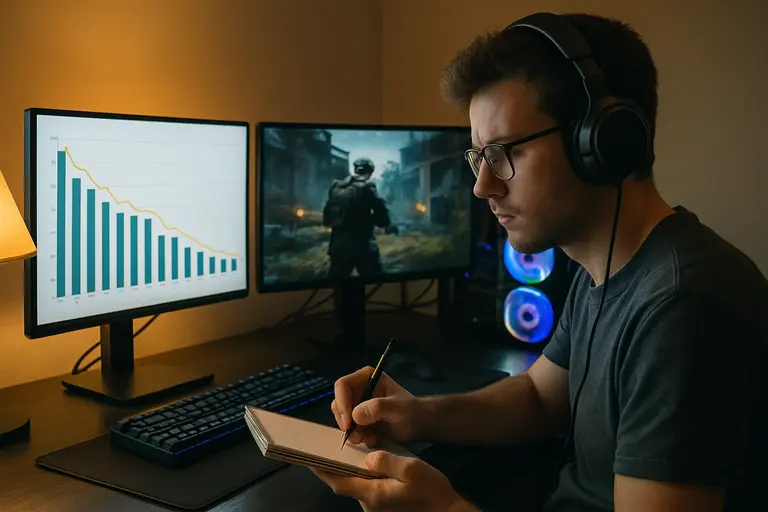
Waiting Is A Risk, Not A Plan
Waiting can still be the right move, but it is not automatically safe. Research notes include warnings that memory supply pressure could last well beyond 2026, though the exact retail impact remains uncertain. If supply improves, patient buyers may get better choices. If memory costs stay high, old stock may disappear and replacement models may arrive at higher prices. That is why a gamer should wait only with a target, not with hope alone.
A practical waiting plan includes a current-card baseline, a target price, and a deadline. If the existing GPU still handles the games being played at acceptable settings, holding off can protect cash. If the card is failing, lacks needed features, or cannot support the monitor, waiting may cost time without saving money.
Used And Previous-Gen Cards Need Extra Checks
The used market can soften the blow, but it is not magic. A previous-generation card with enough VRAM can be a better value than a new card at an inflated price, yet buyers need to check seller history, warranty transfer rules, power requirements, size, and return policy. Mining history is not the only concern; fan noise, thermal paste age, damaged ports, and missing accessories can all matter.
Prebuilts also deserve a closer look in this market. Sometimes a system integrator has inventory or bundle pricing that makes sense compared with buying a standalone GPU. Sometimes the prebuilt hides a weaker power supply, limited motherboard, or cramped case. The same rule applies: judge the full system, not only the GPU line item.
GPU VRAM Pricing And The 2026 Upgrade Call
GPU VRAM Pricing has turned the 2026 graphics-card market into a test of patience and planning. The pressure is visible in reported AMD GDDR6 partner-cost movement and in RTX 50-series retailer pricing, but the effect lands in ordinary places: a player delaying a build, dropping from 1440p to 1080p, keeping an older card, or spending less on storage to protect the GPU budget.
The safest buyer is not the one who guesses the next price move correctly. It is the one who knows the display target, the games being played, the minimum VRAM comfort zone, and the parts that should not be sacrificed. A balanced PC with sensible cooling, a reliable PSU, enough storage, and a GPU bought at a known ceiling is still the better goal than chasing a card tier that no longer fits the budget.
For gamers, the crisis is frustrating because VRAM is both a real technical need and a pricing weapon. More memory can help a card age better, but paying any price for more memory is not smart. The right move on October 15, 2026 is to shop with live prices, treat old MSRP expectations with caution, and buy only when the card fits the whole setup rather than the spec sheet alone.