
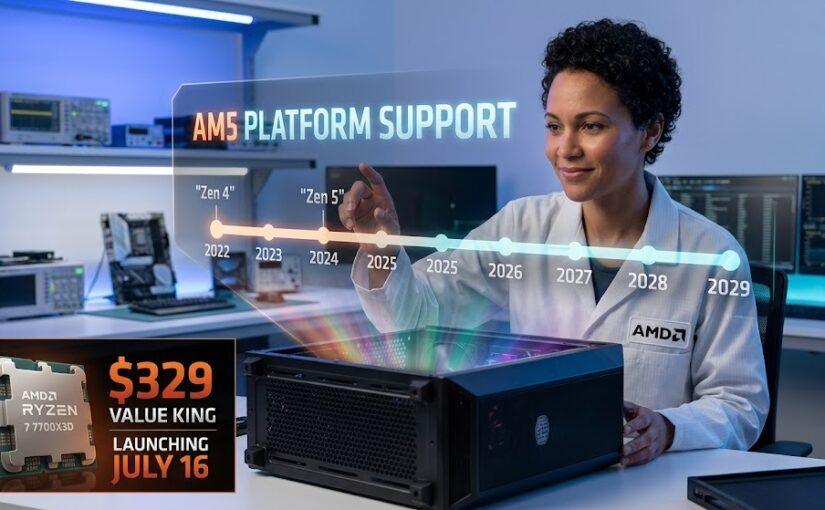
The June 2026 Computex trade show delivered massive updates for PC builders focused on hardware longevity. AMD’s Corporate Vice President, David McAfee, took the stage to announce that the AM5 socket will see continued support through 2029. This confirms that current motherboards will likely run upcoming Zen 6 and Zen 7 processor generations. Buyers waiting to build a new system have a clear signal to invest in the current hardware ecosystem.
This aggressive extension attacks the rapid socket turnover seen from competitors over the last decade. Builders sick of buying a new motherboard every two years get a massive financial break. Paired with this timeline extension, AMD revealed the highly anticipated Ryzen 7 7700X3D. This chip brings the famed 3D V-Cache architecture to a much lower price point. Gamers seeking high frame rates at 1440p without spending flagship money finally have an obvious upgrade path.
Platform Longevity: AM5 Support Through 2029, Upgrade Flexibility, and Investment Protection

When AMD launched the AM5 platform in 2022 alongside the Zen 4 architecture, the official roadmap promised support through “2025+”. With the release of Zen 5, that window shifted to “2027+”. The Computex 2026 keynote pushed that date out to 2029 without any caveats or plus signs. The socket will have at least a seven-year active lifespan in the consumer desktop market. A solid B650 or X670 motherboard purchased today will easily survive two more major CPU upgrades.
The financial impact for system builders is massive. Upgrading a CPU later down the line requires a simple BIOS flash instead of a total machine teardown. You keep your motherboard, your DDR5 memory kit, and your cooling solution. With memory prices remaining high through 2026, avoiding a forced RAM replacement saves hundreds of dollars. The decision to stay on a mature socket makes logical sense right now. Current PCIe 5.0 bandwidth still exceeds the requirements of the fastest consumer graphics cards on the market.
We see this exact strategy paying off for older systems today. Players who bought an early AM4 board years ago can still drop in a late-generation chip and see a massive performance jump. This track record creates high consumer confidence in the brand. You are buying into a long-term ecosystem rather than a disposable generation. The 2029 timeline guarantees your current setup will remain relevant through the end of the decade.
The Ryzen 7 7700X3D: V-Cache Access, Aggressive Pricing, and 1440p Gaming Performance
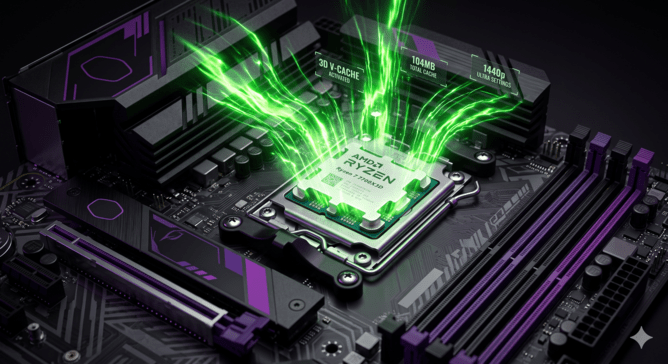
The 3D V-Cache technology remains AMD’s heavy hitter for gaming performance. Stacking extra L3 cache directly on top of the CPU cores dramatically speeds up frame delivery in heavy gaming engines. The barrier to entry was always the cost. Enthusiast chips like the 9800X3D commanded high premiums out of reach for budget builders. The official announcement of the Ryzen 7 7700X3D changes the entire value proposition for the mid-range market.
The Ryzen 7 7700X3D features an 8-core, 16-thread configuration based on the mature Zen 4 architecture. It packs 104MB of total cache and hits boost speeds up to 4.5GHz. Launching on July 16, 2026, with an aggressive MSRP of $329, it directly targets the sweet spot for 1440p gaming rigs. It sacrifices a small amount of clock speed compared to the flagship models to hit this aggressive price point. Reviewers expect it to easily outpace the standard 7700X in heavy gaming workloads.
This processor fits perfectly into budget-conscious AM5 builds. You get the gaming benefits of stacked cache without needing a heavy-duty liquid loop to keep thermal throttling in check. If you need help picking the right thermal setup for these chips, checking out the latest gaming cooling solutions for 2025 can save you from overheating issues. A mid-tier air cooler will easily handle the thermal load of the 7700X3D under heavy gaming loads.
| Processor Model | Core/Thread Count | Total Cache | Boost Clock | MSRP |
| Ryzen 7 7700X3D | 8 / 16 | 104MB | 4.5 GHz | $329 |
| Ryzen 7 9800X3D | 8 / 16 | 104MB | 5.2 GHz | $479 |
| Ryzen 7 5800X3D | 8 / 16 | 96MB | 4.5 GHz | $349 |
The 10-Year AM4 Celebration: Anniversary Edition Chips, Carbice Ice Pad, and Legacy Support
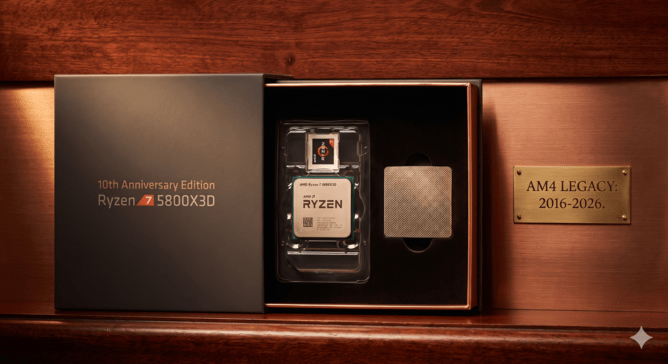
The AM4 socket remains one of the most successful platforms in PC building history. AMD used the Computex stage to celebrate the ten-year anniversary of this legendary platform. Rather than just a verbal acknowledgment, they launched a special piece of hardware. The Ryzen 7 5800X3D 10th Anniversary Edition gives builders on older motherboards one final send-off upgrade.
This special edition chip maintains the same underlying specifications that made the original 5800X3D a favorite among gamers. You still get 8 cores, 16 threads, and 96MB of stacked L3 cache running on the Zen 3 architecture. The unique value comes from the included hardware bundle. The CPU ships with a Carbice Ice Pad, a next-generation thermal interface material that replaces messy thermal paste. This simplifies the installation process for users doing a quick drop-in upgrade and prevents thermal pump-out over long periods.
Priced at $349 and hitting retail shelves on June 25, 2026, this chip targets users who refuse to abandon their AM4 motherboards. If your current system feels sluggish in modern titles, dropping in this processor requires zero platform changes. You keep your DDR4 RAM and your existing PSU. Staying updated on hardware releases through sources like Tom’s Hardware CPU news helps track these late-generation upgrades. It proves that a well-designed socket can survive multiple console generations.
Strategic Hardware Upgrades: Platform Stagnation, Memory Pricing, and Future-Proofing
The tech industry is currently facing a period of high component pricing. Memory shortages and high DDR5 costs make full system rebuilds painful for the average gamer. AMD’s decision to extend AM5 support provides a financial relief valve. You can invest in a strong motherboard today and slowly upgrade other components as your budget allows over the next three years.
Intel is running a similar play with its upcoming LGA 1954 socket, signaling a broader industry shift away from rapid socket obsolescence. When memory prices are out of reach for the majority of consumers, pushing new DDR6 standards makes no sense. The current PCIe 5.0 speeds offer more than enough bandwidth for the next few generations of graphics cards and NVMe storage drives. The hardware market is stabilizing around the current interface standards to let consumers catch up.
Builders should focus their budgets on components that offer immediate, tangible frame rate improvements. Grabbing a 7700X3D for an AM5 board gives you the frame rates you need today and leaves the door open for a Zen 7 upgrade in 2029. Staying informed via Wccftech hardware analysis can clarify which specific motherboard chipsets will receive these future BIOS updates. The strategy is clear: buy a good foundation and let the socket support do the heavy lifting over time.
EXPO Ultra Low Latency: Memory Profiling, Automatic Overclocking, and Performance Gains
Beyond the processor announcements, AMD rolled out a massive update for system memory. The new EXPO Ultra Low Latency technology takes the guesswork out of memory tuning. Getting the best performance out of Ryzen processors requires tight memory timings. Manually tuning DDR5 RAM in the BIOS often leads to blue screens and endless stability testing.
This new EXPO revision allows certified memory kits to communicate directly with the motherboard for optimal latency settings. It functions as a one-click profile that pushes the memory controller to its safe limits without requiring a degree in computer engineering. Users can expect improved minimum frame rates and smoother overall gameplay in CPU-bound titles. The technology pushes the AM5 platform to its highest stable limits.
- One-Click Optimization: Avoids manual sub-timing adjustments in the BIOS menu.
- Certified Validation: Guarantees full stability with approved memory vendor kits.
For enthusiasts trying to maximize the performance of a chip like the 7700X3D, this memory tech is a perfect pairing. You get the massive L3 cache handling the heavy computational lifting. At the same time, the low latency memory feeds the processing cores faster than standard DDR5 kits. Hardware channels like KitGuru overclocking deep dives often demonstrate how these subtle memory tweaks push system performance past stock expectations. The AM5 platform is evolving from a new architecture into a highly refined, mature ecosystem ready to dominate the rest of the decade.