

AMD’s reported Radeon price hike is arriving at the worst possible moment for PC gamers who were hoping the graphics-card market would cool down before their next upgrade. Multiple hardware reports at the start of August 2026 said AMD had told add-in board partners that GPU-and-memory bundle pricing would rise by at least 10% in August, with the increase tied to climbing memory costs and the broader AI-driven component squeeze. The claim remains a supply-chain report rather than a formal AMD retail announcement, so buyers should treat exact shelf-price movement as something to verify card by card. The direction of travel is still hard to miss: Radeon cards are being pulled into the same pricing pressure that has already hit Nvidia’s GeForce RTX 50-series lineup. The Next Web summarized the report on August 1, 2026, saying AMD had informed AIB partners of at least a 10% increase for GPU and memory kits, following Nvidia-related price movement.
That matters for Cooler Master Gaming readers because a GPU price hike does not only change the graphics-card line on a parts list. It changes the whole build. A buyer who expected to move from a midrange GPU into a Radeon RX 9070 XT or RX 9070 may now have to rethink the case budget, PSU headroom, monitor target, cooling plan, SSD capacity, and timing of the purchase. The same upgrade pressure was already visible in Cooler Master Gaming’s recent 2026 memory crisis gaming PC analysis, where RAM, SSD, and GPU memory pricing were starting to reshape the practical meaning of a “good” gaming PC.
Why Radeon Pricing Is Becoming A Timing Problem
The Radeon price-hike report is important because AMD’s current consumer GPU pitch has depended heavily on value. Nvidia still dominates many high-end and software-led conversations through GeForce branding, DLSS, CUDA use cases, creator-app support, and premium ray-tracing perception. AMD’s Radeon RX 9000-series cards have often been judged by whether they deliver strong raster performance, competitive VRAM, and a better price for gamers who do not want to pay Nvidia’s highest premiums.
That value argument becomes harder when AMD prices rise too. PC Gamer’s July 2026 graphics-card price watch already noted that Radeon RX 9000 cards had increased in price, with U.S. gamers seeing larger increases than buyers in the U.K. The same tracker listed RX 9070 XT around $690, RX 9070 around $635, RX 9070 GRE around $550, RX 9060 XT 16GB around $450, and RX 9060 XT 8GB around $360 in U.S. deal tracking at the time it was checked. PC Gamer also said GPU prices become more difficult once buyers move over the $500 range, which is exactly where several Radeon cards sit.
That creates a timing trap. If a gamer buys now, they may avoid later increases but risk missing discounts, bundles, or better supply. If they wait, the same GPU tier could become more expensive. If they switch to Nvidia, they may face similar or worse pricing pressure. If they drop to a lower tier, they may lose VRAM, 1440p headroom, or long-term comfort.
The decision is less about brand loyalty and more about the full build window. A player upgrading only the GPU can compare current card prices against performance targets. A player building a whole PC needs to ask whether the graphics card will force compromises elsewhere.
How Nvidia’s Price Pressure Changes AMD’s Value Role
AMD’s reported move does not exist in isolation. Tom’s Hardware reported in late July 2026 that MSI and Colorful raised Nvidia RTX 50-series prices in China, with some models far above MSRP. The outlet said MSI’s RTX 5070 Ti Gaming Trio OC was 76% above MSRP, while Colorful’s RTX 5080 Vulcan W OC was 59% above MSRP, and its RTX 5070 Ti Vulcan W OC was 58.7% above MSRP. The article tied the pressure to VRAM costs and a broader component crisis, including rising memory costs.
Those figures matter even for U.S. gamers because GPU markets are global. Board partners, memory suppliers, freight channels, retailers, and regional demand all influence what eventually appears in U.S. stores. China pricing does not translate one-to-one into a U.S. shelf price, but it does show the kind of pressure that can move through the supply chain.
AMD’s value position is strongest when Nvidia prices look inflated, and Radeon cards remain close to reasonable launch targets. Once both vendors face rising memory and board costs, buyers lose the easy answer. The GPU market becomes a comparison between imperfect options: pay more for GeForce features, pay more than expected for Radeon value, step down a tier, buy used, or wait.
That is why upgrade timing gets harder. A Radeon price hike would reduce the safety valve that many PC gamers rely on when Nvidia cards get expensive. AMD does not need to match Nvidia’s highest prices to create a problem. A 10% increase in the wrong tier can push a card from “stretch but sensible” to “maybe wait.”
Why Memory Costs Are Now A Graphics-Card Story

The most important part of the reported AMD increase is the phrase “GPU and memory kits.” Graphics cards are not priced only by the GPU chip. VRAM capacity, memory type, board design, cooler size, power components, and supply contracts all shape what AIB partners can build and sell.
This is why the 2026 GPU market feels different from a normal cycle. Memory is not a background cost anymore. It is one of the central constraints. TechSpot’s mid-2026 GPU pricing update described the market as eight months into a memory crisis, with DDR5 DRAM prices having more than quadrupled over the previous eight months. The same analysis said GPU prices across ten regions were 16% above their “true MSRP” metric on average, or 10% above that metric when excluding the RTX 5090.
That data creates a useful distinction. GPU prices have not exploded uniformly in every region or tier, but the memory crisis has still reset expectations. A buyer who remembers late-2025 discounts may feel as if every 2026 card is overpriced. A buyer entering the market for the first time may see current prices as normal. The risk is that both groups make decisions based on old assumptions.
For Radeon buyers, memory cost matters in three ways. First, VRAM capacity affects long-term usefulness. Second, memory pricing affects what board partners charge. Third, rising memory costs can make discounted older cards more attractive, even when they lack newer features.
What This Means For 1080p, 1440p, And 4K Buyers
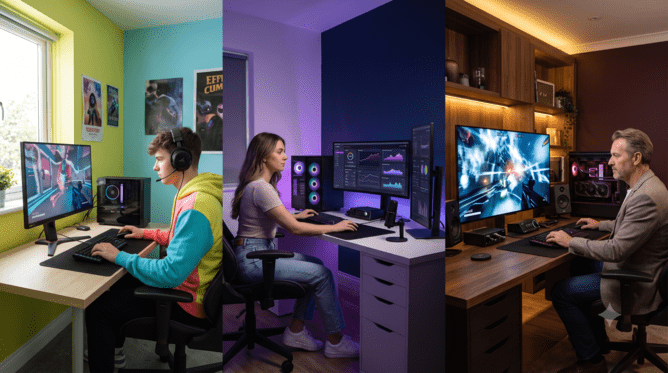
The reported AMD price hike affects players differently depending on the display target. A 1080p gamer does not face the same pressure as a 4K player. A high-refresh 1440p gamer may sit in the most difficult middle zone, where the card has to be strong enough for smooth performance but not so expensive that the build loses balance.
A 1080p esports-focused player can still shop lower tiers more comfortably. Cards such as the RX 9060 XT or Nvidia RTX 5060-class options may be enough if the goal is high frame rates in competitive titles rather than maximum settings in heavy AAA games. That does not make low-end pricing harmless, but it gives the buyer more flexibility.
A 1440p player has a tougher call. The RX 9070, RX 9070 GRE, RX 9070 XT, RTX 5070, and RTX 5070 Ti live in the exact price band where a 10% shift can change the whole build. This buyer also cares about VRAM more, especially for high-resolution textures, open-world games, ray tracing, and longer ownership cycles.
A 4K player faces the least forgiving market. If high-end GeForce cards are already inflated and Radeon cards rise too, a true 4K build can become harder to justify unless the buyer is ready for a premium budget. That may push some players toward 1440p OLED or ultrawide displays instead of chasing 4K GPU demand.
| Buyer Type | Likely Upgrade Pressure | Smarter 2026 Question |
|---|---|---|
| 1080p esports player | Lower GPU tier may still work | Is a cheaper card enough for high-refresh play? |
| 1440p mainstream player | Midrange prices are most sensitive | Does the card have enough VRAM and value? |
| 1440p OLED / ultrawide player | GPU and monitor demand rise together | Should the display or GPU come first? |
| 4K player | High-end pricing hurts most | Is this the right year to chase 4K settings? |
| Creator-gamer | VRAM and software support both matter | Is Radeon’s value still stronger for the workflow? |
Why Gamers May Rethink The Whole Build Instead Of Just The GPU
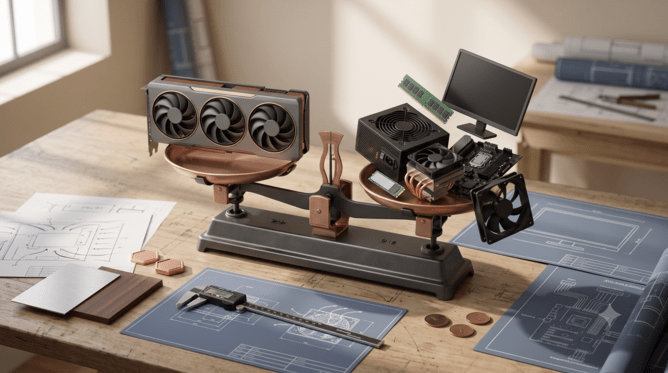
A GPU price hike creates a chain reaction through the rest of the PC. Many buyers start with a graphics card target, then fit the remaining parts around it. That works when pricing is predictable. It works less well when memory-driven increases move the GPU budget after the rest of the build has already been planned.
A Radeon RX 9070 XT that costs more than expected may push a buyer to cut from the case, CPU cooler, PSU, motherboard, storage, or monitor. That can be a mistake. A weaker power supply can limit future upgrades. A cramped case can increase GPU noise. A cheaper cooler can make the CPU run louder. A smaller SSD can make a modern game library annoying to manage.
The better approach is to identify which parts will outlast the GPU. A strong case, reliable power supply, good airflow, and a quality monitor can support multiple graphics-card cycles. If GPU pricing is unstable, those platform parts may be better places to spend first, especially for buyers who can keep an existing card for a little longer.
This is not a call to ignore GPU upgrades. It is a reminder that an expensive GPU inside a weak platform is not a premium build. A balanced system often feels better than a system with one standout card and several compromised support parts.
How AMD’s Official Radeon Positioning Fits The Price Debate
AMD’s own Radeon RX graphics-card page positions the RX 9000 series around RDNA 4, ray tracing, AI accelerators, video streaming and recording quality, and ongoing AMD Software optimization. That is the intended product story: newer Radeon cards are not only budget alternatives; they are meant to feel current for gaming, streaming, and AI-assisted visual features.
That positioning explains why a price increase is risky. Radeon’s best path in 2026 is not simply being cheaper than Nvidia. It has to be cheap enough, fast enough, feature-rich enough, and stable enough for players to feel comfortable choosing AMD even when Nvidia’s ecosystem strengths are attractive.
A modest increase may not break that argument if Nvidia’s prices stay higher. A larger retailer-level jump could. The Radeon buyer is often value-sensitive. If the gap narrows too much, some players may move back toward GeForce for DLSS, creator tools, ray-tracing reputation, or resale comfort. Others may step down to an RX 9060 XT-class card and accept lower settings.
The price hike also arrives as entry-level and lower-midrange cards face awkward memory decisions. Recent coverage of ASRock’s Radeon RX 9050 noted 4GB and 8GB configurations, bringing back the uncomfortable question of how little VRAM is acceptable in a modern gaming PC. That topic is separate from the RX 9070-class price hike, but it shows the same memory-market problem hitting different tiers.
What Buyers Should Watch In August 2026
The first thing to watch is actual retailer movement in the United States. A reported partner price increase does not always translate to an immediate 10% jump on every card at Amazon, Newegg, Best Buy, Micro Center, or board-partner stores. Some inventory may already be priced. Some retailers may absorb part of the movement for a short time. Some models may move faster than others.
The second thing to watch is which Radeon tiers change first. A price increase on RX 9070 XT and RX 9070 cards would affect premium 1440p and entry-level 4 K buyers. A price increase on RX 9060 XT cards would hurt more budget-sensitive builders. A price increase on board-partner factory-overclocked models could make reference-style or simpler cooler designs more attractive.
The third thing to watch is Nvidia’s response. If GeForce prices remain high or keep climbing, AMD can still look competitive after a 10% increase. If Nvidia discounts certain RTX 50 cards, the Radeon value argument tightens.
The fourth thing to watch is VRAM. An 8GB card at a low price can still make sense for some 1080p builds, but buyers looking for longer ownership at 1440p should think carefully before sacrificing memory capacity only to dodge a short-term price jump.
Why Waiting Is No Longer The Easy Answer
PC gamers often hear that waiting is the safest upgrade strategy. That advice becomes weaker during a component shortage. Waiting can lead to better deals when supply improves. Waiting can also lead to higher prices when memory costs keep climbing, old inventory disappears, and new stock arrives at higher partner pricing.
Buying immediately is not automatically smart either. Panic-buying a card above the target price can lock a builder into a poor value decision. The better approach is setting a real ceiling before shopping. A buyer should know the maximum price that makes sense for a target GPU tier, the fallback card that still meets the display goal, and the parts that should not be sacrificed to afford the GPU.
For many players, that may mean delaying the graphics card but finishing the platform. For others, it may mean buying a Radeon card before higher pricing reaches local inventory. For budget buyers, it may mean choosing a used card or a lower tier with clear expectations.
The market is messy, but the decision does not have to be. Start with the display, then the games, then the frame-rate target, then the GPU. After that, protect the supporting parts that keep the system quiet, stable, and upgradeable.
Why Radeon Pricing Could Shape The Next PC Build Cycle
AMD’s reported Radeon price hike is a sign that the memory crisis has moved from background supply-chain news into everyday gaming decisions. It affects buyers comparing RX 9000 cards, Nvidia RTX 50 models, older GPUs, mini PCs, prebuilts, and full desktop builds. It also shows why the next upgrade cycle may reward planning more than speed.
For AMD, the challenge is keeping Radeon value clear even as costs rise. For Nvidia, the challenge is defending premium pricing in a market where buyers are more sensitive to every dollar. For gamers, the challenge is resisting the urge to treat the GPU as the only part that matters.
The smartest 2026 build may not be the one with the newest card. It may be the one where the graphics card, monitor, case, PSU, cooling, RAM, and storage all match the player’s real target. If Radeon prices rise in August, that balance becomes even more important. A good gaming PC is still possible, but timing the upgrade now takes more homework than it did when memory was cheap, and GPU discounts were easier to trust.