
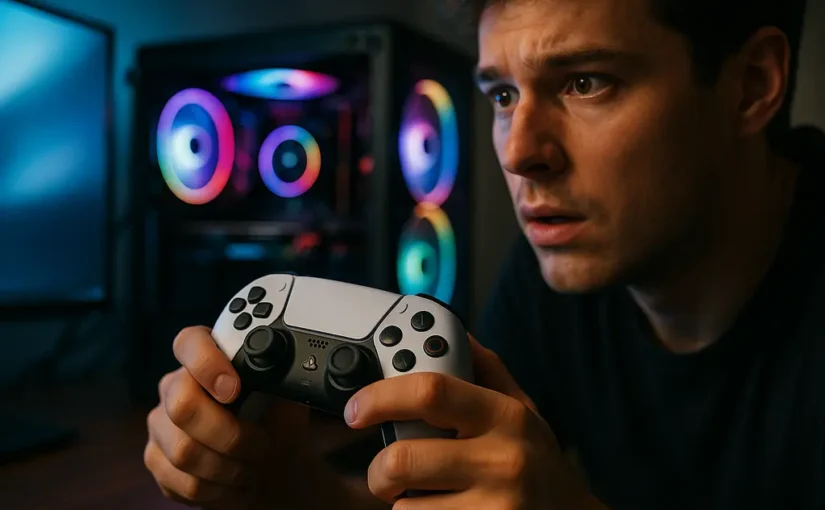
Gaming hardware prices have become one of the biggest buying problems for players in 2026, not because one premium GPU is expensive, but because the pressure is spreading across graphics cards, consoles, memory, storage, and full PC builds. GamesRadar reported that U.S. gaming hardware costs rose from an average of $452 to $525 in the first half of 2026, a 16% increase, citing analysis that tied much of the pressure to AI-driven demand for RAM and chips GamesRadar report. For gamers, that turns a normal upgrade cycle into a budgeting problem: the GPU, console, SSD, and memory kit can all move against you at once.
This is not the same as a short-term launch markup on one hard-to-find product. The current pressure is broader. Console buyers are seeing price increases. PC builders are finding fewer easy discounts. GPU shoppers are comparing cards against prices that may have drifted well above launch expectations. Memory is no longer a quiet line item in the build sheet; it is shaping the cost of the graphics card, the system RAM, and the SSD sitting next to it.
Why Gaming Hardware Prices Jumped In 2026
Gaming Hardware Prices And The AI Memory Squeeze
The clearest reason gaming hardware prices moved so sharply is memory demand. AI data centers need enormous quantities of memory and storage hardware, and that demand competes with consumer PC parts for manufacturing capacity. The result is not always a visible shortage on every shelf, but it can raise the cost basis for the parts that gamers buy. If VRAM, DRAM, and NAND get more expensive, board partners and system makers have less room to cut prices without hurting margins.
That is why the 16% average increase matters. A single premium product can be ignored by most buyers. A wider hardware-cost move cannot. The player building a midrange PC may be hit by higher DDR5 prices, fewer SSD deals, and a GPU that refuses to fall back to a comfortable sale price. The console buyer may avoid PC component shopping, but still face platform price increases and pricier accessories. Even the player staying on older hardware can feel the impact if a replacement controller, headset, storage expansion, or monitor costs more than expected.
Why GPU Pricing Sets The Mood For The Whole Build
Graphics cards remain the emotional center of PC buying, and the 2026 market is rough. Tom’s Hardware reported that current-generation GPU prices remain high because sale discounts are scarce and VRAM costs are rising, with the GeForce RTX 5090 cited as moving from a $1,999 launch price to more than $4,200 in tracked listings Tom’s Hardware pricing analysis. That card is not a mainstream purchase, but it shows how far high-end pricing can stretch when supply, demand, and memory costs line up badly for buyers.
The midrange impact is more practical. A gamer planning around 1080p or 1440p does not need a flagship GPU, but they still shop in a market shaped by the same cost pressure. If board partners have higher memory costs, lower-tier cards do not automatically stay immune. If premium cards stay expensive, demand can spill into the next tier down. If discounted last-gen stock dries up, the used market may become more attractive, but also more uneven.
What This Means For Console And PC Buyers
Console Value Is No Longer Simple
Consoles have usually been the cleaner answer for players who want fixed hardware, predictable compatibility, and a lower entry cost than a gaming PC. That value story is being tested. The research notes point to console price hikes from major platform holders in 2026, while GamesRadar also referenced the pressure around newer hardware moving closer to the $500 range. The exact value call now depends on the system, region, bundle, subscription costs, game pricing, storage needs, and whether the buyer already owns a compatible library.
For some players, a console will still be the most sensible route. If the goal is couch play, first-party releases, local multiplayer, or a simple setup, a console avoids the parts-by-parts stress of PC building. For others, the math has changed. Once storage expansion, online services, controllers, and higher hardware prices are counted, the gap between console and PC can shrink. It does not vanish, but it becomes worth checking rather than assuming.
PC Builds Need Stricter Priorities
PC buyers now need to think less like spec collectors and more like budget editors. The question is not, “What is the fastest part I can afford?” It is, “Which part of the build will I regret cutting?” A graphics card usually has the biggest effect on gaming performance, but a weak power supply, cramped case, poor cooling, or tiny SSD can make a system feel compromised long before the GPU is obsolete.
This is where planning beats panic-buying. If gaming hardware prices keep moving, buyers should set a ceiling for each major part before opening store tabs. A 1440p player might protect the GPU budget but avoid overspending on a motherboard. A 1080p esports player may save money with a lower GPU tier and put more into a high-refresh display. A creator-gamer may accept a higher GPU cost if VRAM and software support matter for work as well as play.
Cooler Master Gaming has already tracked the wider buyer squeeze in its 2026 buyer reality analysis, and the same pressure shows up in memory planning. If RAM and SSD pricing are shifting the build sheet, the site’s look at the 2026 memory crisis is a useful companion read for upgrade timing.
How To Buy Without Chasing Bad Value

Start With The Display, Not The GPU
The most useful way to stay grounded is to start with the screen you actually use. A 1080p monitor, a 1440p high-refresh panel, and a 4K TV do not ask the same thing from the hardware. If you only play competitive games at 1080p, you may not need to chase a card aimed at heavier 1440p or 4K workloads. If you own a 1440p ultrawide, cutting the GPU too far may create a weaker long-term match. If you play on a 4K TV, you should expect the GPU budget to be the hardest part of the build.
This display-first approach also helps console buyers. A player using a 1080p TV may not get the same benefit from more expensive hardware as someone with a 4K OLED. A handheld player may care more about game library, battery life, storage, and comfort than raw graphics output. The right purchase is the one that fits the actual setup, not the one with the loudest marketing push.
Use Fallback Parts Before You Shop
Before buying, choose a primary part and a fallback part for each expensive category. For a GPU, that could mean one target card and one lower-tier card you would accept if pricing gets silly. For memory, it could mean picking the capacity you need now rather than paying extra for a kit that only looks good on paper. For storage, it could mean starting with a sensible SSD and adding more later when prices improve.
- Set a maximum price: Decide the highest price that still makes sense for the GPU, console, or upgrade part before stock alerts pressure you.
- Protect core platform parts: Do not cut too hard on the PSU, case airflow, or storage just to stretch for a GPU tier.
- Check real local listings: National averages help, but your actual price depends on region, retailer stock, bundles, and return policy.
- Compare against keeping your current gear: If the upgrade is not urgent, a settings adjustment or SSD cleanup may buy time.
For players who split time between PC and console, community gaming habits also matter. A multiplayer group moving to one platform can make a technically weaker purchase feel more valuable. A single-player backlog can make waiting easier. Related gaming communities across the network, such as those found on MostPlays, often showcase this consumer split, with some players opting to purchase early for immediate access, while others prefer waiting for price drops and better bundles.
Gaming Hardware Prices And The 2026 Upgrade Plan
The sharp rise in gaming hardware prices does not mean every gamer should stop buying. It means every upgrade needs a clearer reason. If your current PC cannot run the games you play at acceptable settings, a targeted GPU or platform upgrade can still make sense. If your console is your main system and the library fits your habits, paying more may still be easier than building a new PC. If you are replacing hardware only because a new generation exists, 2026 is a poor year to shop casually.
The safest move is to separate needs from wants. Need is storage space for games you actively play, enough RAM for your workload, a GPU matched to your monitor, or a console that supports the library your friends use. Want is paying a premium for a tier you will barely use, buying a larger SSD because the deal looks temporary, or replacing a working setup without a clear target. That distinction matters more when average costs have already moved upward.
Gaming hardware prices may stay unpredictable while AI memory demand keeps pulling on the same supply chain that feeds PCs, consoles, and graphics cards. Buyers cannot control that. They can control timing, part selection, and expectations. Build around the display, keep the platform balanced, check real retailer prices, and avoid treating launch prices or old sale prices as a promise. In 2026, the best hardware purchase is not the flashiest one; it is the one that still makes sense after the whole setup cost is counted.