
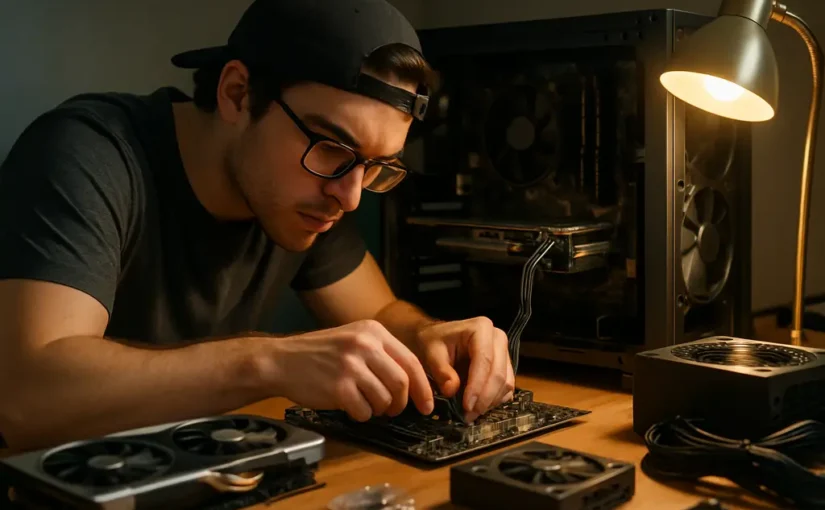
As of September 3, 2026, rising GPU prices have become more than a graphics-card problem for PC gamers. They now affect the entire build sheet: the monitor target, memory capacity, storage size, power supply choice, case airflow, and how long a player may keep an older system running. The pressure is not just at the top end, either. Once the GPU line item expands, even a midrange build can start losing quality in the parts that make a PC quiet, stable, and pleasant to use for several years.
That is why the smarter question is no longer just which GPU to buy. It is whether the whole system still makes sense after the graphics card takes a larger share of the budget. A card that looks acceptable in isolation can become a weak purchase if it forces cuts to the PSU, storage, cooling, or display. For buyers comparing current pricing against earlier expectations, the practical answer may be to reset the build around the games and screen they actually use, not around the GPU tier they hoped would be affordable.
How Rising GPU Prices Change The Build Sheet
Rising GPU Prices Hit The Upgrade Window
The most visible consumer impact is delayed upgrading. In May 2026, a survey of more than 1,500 PC gamers found that 60% had no plans to build or upgrade a new PC in the next two years, with high prices for GPUs, memory, and SSDs cited as part of the squeeze, according to Tom’s Hardware survey. That is a big shift for a hobby that usually runs on staggered upgrades: a GPU one year, a monitor the next, then storage or cooling later.
For players, waiting can be rational. If a current PC still runs the main library at acceptable settings, spending heavily during a pricing spike may not feel worth it. The risk is that waiting does not automatically mean better prices later, especially when memory and AI-related demand remain part of the supply story. The safest move is not panic-buying or automatic waiting. It is setting a hard ceiling for the GPU tier and building fallback options before shopping.
The GPU Is Now A Quality Gate
A graphics card has always been the largest gaming-performance purchase in many builds, but it is now acting like a quality gate for the rest of the system. If the GPU consumes too much of the budget, the builder may choose a cheaper case with weaker airflow, a lower-capacity SSD, a basic motherboard, or a power supply with less upgrade headroom. None of those compromises always ruins a PC, but stacking several of them can make the machine louder, tighter, harder to upgrade, and more annoying to live with.
This is where budget discipline matters. A balanced gaming PC does not need the most expensive version of every part. It does need parts that fit together. A very expensive GPU inside a cramped, hot case with limited storage is not a better gaming experience than a slightly lower GPU tier paired with cleaner airflow, enough SSD space, and a power supply that is not running close to its practical limit.
Where The Budget Gets Cut First
Memory, Storage, And Power Get Squeezed
When the GPU price rises late in the planning process, memory and storage are often the first targets. Dropping RAM capacity, choosing a smaller SSD, or delaying a second drive can make the total price look manageable. The problem is that modern game libraries are not getting smaller, and players who rotate several large titles can run into storage friction quickly. A smaller SSD may be fine for a focused esports setup, but it can feel restrictive for players who keep big single-player games, multiplayer installs, mods, capture files, and launchers on the same machine.
Power supplies are another tempting cut, and that can be a poor trade. Buying far more wattage than needed is not automatically smart, but buying a cheap unit with little headroom can limit future upgrades. The PSU is one of the parts most likely to survive more than one GPU cycle if chosen well. Saving a small amount there to stretch into a higher GPU tier may not age well.
Prebuilts Can Hide The Same Trade-Offs
Prebuilt buyers face a similar issue, just with less control. A system may advertise a recognizable GPU, but the supporting parts decide how good the package really is. If cost pressure pushes vendors toward smaller SSDs, lower memory configurations, basic cooling, or no-name power supplies, the headline GPU can distract from the compromises underneath. Buyers should read the full parts list, not just the graphics-card name.
For related pricing context across PC parts, our recent GPU price increases buying tactics piece covers how to set upgrade limits before a deal turns into a budget problem. Readers comparing broader consumer tech signals across the same network can also explore Rave Tech for additional insights, but the same rule applies everywhere: check the actual configuration before reacting to a sale tag.
Why VRAM Pricing Changes The Advice
The 8GB Decision Is Less Simple
VRAM used to be an easy upsell for many gamers: buy more if the price gap was modest and the card would be kept for years. In 2026, that advice needs more caution. Late-August 2026 GPU price tracking from PC Gamer’s price tracking said the outlet had followed graphics-card pricing for a full year and found conditions worse than before, while also warning that Nvidia cards with more than 8GB of VRAM were often hard to justify for many gamers at prevailing prices.
That does not mean every 8GB card is automatically the right buy, and it does not mean every higher-VRAM card is wasteful. It means the price gap has to match the use case. A 1080p player focused on competitive games may not need to stretch into a costly card just to increase memory capacity. A 1440p player using high texture settings, ray tracing, or open-world games may still value more VRAM, but only if the total card price does not wreck the rest of the build.
Used And Last-Gen Cards Need More Scrutiny
Rising GPU prices can make used and last-generation cards more attractive, but those choices need careful checks. Warranty status, cooler condition, seller history, power requirements, physical size, and current driver support all matter. A used card that saves money but needs a PSU replacement may not be the bargain it first appears to be.
Older cards can still make sense for budget-limited players, especially at 1080p or for less demanding game libraries. The mistake is treating the used market as automatically safe. The same pricing pressure affecting new cards can inflate used prices too, so buyers should compare against real local listings, return options, and the cost of any supporting parts needed to make the card work properly.
How To Protect Build Quality In 2026
Start With The Display And Games
The display target should shape the build before the GPU brand does. A 1080p high-refresh setup, a 1440p single-player setup, and a 4K living-room PC do not need the same graphics budget. Players who start with the monitor resolution, preferred settings, and main games can avoid overspending on a card that does not match the rest of the setup.
- Set a maximum GPU price before browsing retailer listings.
- Keep enough budget for a reliable PSU, suitable case airflow, and practical SSD capacity.
- Compare full system cost, not just the graphics-card price.
- Check return policies and warranty coverage, especially on expensive cards.
- Consider delaying the GPU while upgrading platform parts that will last longer.
Protect The Parts That Outlast The GPU
Cases, power supplies, monitors, and storage can remain useful across multiple graphics-card cycles. If the GPU market feels overpriced, those parts may be better places to spend first, especially for players who can tolerate reduced settings on an existing card. That approach keeps the PC moving forward without forcing a bad graphics-card purchase.
This is also where build quality becomes a gaming-budget issue rather than a vanity issue. Better airflow can reduce noise. Adequate storage can reduce library juggling. A sensible PSU can keep a future upgrade path open. Those benefits may not show up in a GPU comparison chart, but they affect daily use.
What Rising GPU Prices Mean For Gaming Budgets
Rising GPU prices are pushing gamers toward harder choices: spend more, step down a tier, buy used, wait, or rebalance the entire PC. None of those choices is automatically right. The best move depends on the current machine, the target resolution, the game library, and how long the buyer expects to keep the next card.
The practical lesson for 2026 is to stop treating the GPU as a separate purchase from the rest of the build. A good gaming PC is the result of matched parts, not one expensive card surrounded by avoidable compromises. If the graphics-card market stays tight, the winning builds will be the ones with clear limits, realistic display targets, and enough budget left for the parts that keep the system usable after the excitement of the GPU upgrade wears off.