
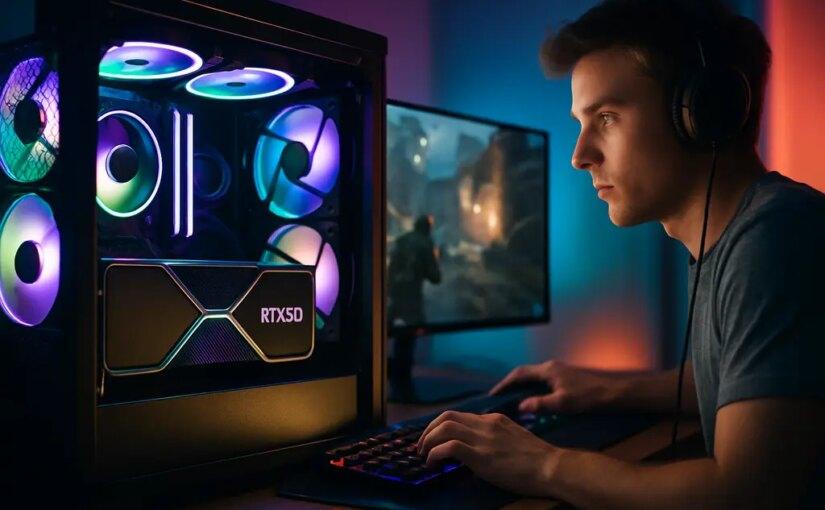
RTX 50 prices became a bigger problem for PC builders after U.S. retail listings moved sharply higher between June and August 2026. The most useful data point came from Tom’s Hardware, which reported Newegg median listing increases of 27% for the RTX 5060, 36% for the RTX 5070, and 39% for the RTX 5060 Ti 16GB during that period, with some higher-end cards also rising by 9% to 10% Tom’s Hardware pricing report. That does not mean every card at every retailer jumped by the same amount, but it does show why a midrange GeForce upgrade felt less predictable by late August 2026.
For gamers, the issue is not just whether a single graphics card costs more than expected. A GPU price move can disturb the whole parts list: case, PSU, cooler, monitor, RAM, SSD, and the point where a build stops feeling sensible. Buyers who planned around a fixed graphics budget now need to judge the card against the display they actually use, the games they play, and the platform parts they should not weaken just to cover a higher GPU bill.
Why RTX 50 Prices Rose In August 2026
RTX 50 Prices Are Being Pulled By Memory Pressure
The cleanest explanation is memory pressure. Graphics cards are not priced by the GPU die alone. VRAM type, capacity, board design, cooling, power delivery, partner margins, and retailer stock all matter. If memory becomes more expensive or harder to allocate, the retail price of a consumer graphics card can move even if the official product stack has not changed.
The research picture also points beyond normal gaming demand. SK Hynix’s CEO warned of what he described as the worst-ever memory supply shortage in 2027 and said demand could outstrip supply beyond 2030 SK Hynix supply warning. That is not a direct promise that any one GeForce model will cost a certain amount, but it does help explain why memory-linked GPU pricing felt tense in August 2026.
The Midrange Was Hit Hard Enough To Change Builds
The RTX 5060, RTX 5070, and RTX 5060 Ti 16GB are especially important because they sit in the zone many players target for practical 1080p and 1440p PCs. A high-end card being expensive is painful, but not surprising. A mainstream card rising by more than a quarter over a short window is harder to absorb because it affects buyers who were already balancing cost, monitor goals, and longevity.
This is where RTX 50 prices become a build-planning issue rather than a brand argument. If the GPU tier you wanted now eats the money set aside for a better PSU or a larger SSD, the smarter move may be to pause, lower the GPU target, or keep an older card a little longer. Paying more can make sense if the card solves a real problem. Paying more because the model number looked right three months earlier is a weaker reason.
How To Judge Value Before Buying
Start With The Monitor, Not The GPU Name
The easiest mistake is shopping by model rank first. A better order is display, game type, settings target, then graphics card. A 1080p player who spends most of their time in competitive games has a different need from someone using a 1440p high-refresh monitor in heavier single-player releases. A 4K buyer has the least room for compromise and should be especially careful about paying inflated high-end pricing without checking whether the display target is worth the cost.
That does not mean lower-tier cards are automatically good value. The Tom’s Hardware data showed that the RTX 5060 also rose sharply in median Newegg listings between June and August 2026. A cheaper model can still be poor value if the price has moved too close to a stronger tier, or if a previous-generation option meets the same target for less money at a reputable seller.
Protect The Parts That Outlast The Card
A graphics card is often the most exciting part of the build, but it is not the only part that affects ownership. A quality power supply, a case with good airflow, a sensible CPU cooler, and enough storage can last across multiple GPU cycles. Cutting those parts to chase a newly inflated graphics card can create a louder, hotter, less flexible PC.
Before buying, set a hard ceiling for the card and a second-choice GPU that still fits the monitor. If the price crosses that ceiling, do not automatically raid the rest of the build. Check whether the money is better kept for a stronger platform, a monitor upgrade, or a later GPU purchase. For a broader checklist on price pressure across a full PC, our GPU price increases guide covers similar budget trade-offs.
What Different Buyers Should Do
1080p Players Have The Most Flexibility
A 1080p player can often stay disciplined. If the goal is high frame rates in less demanding competitive games, there may be no need to stretch into a higher GeForce tier during a price spike. The right question is whether the card is enough for the actual games and refresh-rate target, not whether it is the newest option on the shelf.
That said, do not ignore VRAM and pricing just because the display is 1080p. If a lower card has risen so much that it sits close to a stronger model, the cheaper sticker may not be the better buy. Compare real listings at trusted retailers, check return windows, and avoid assuming MSRP is still a useful street-price guide in September 2026.
1440p Buyers Need The Tightest Budget Control
For many readers, 1440p is the pressure point. It asks more from the GPU than 1080p, but it does not always justify a premium-tier card. This is where RTX 50 prices can push a balanced build out of shape. A card that looked like the natural pick in June 2026 may have become too expensive by late August listings.
If you are building for 1440p, compare the GPU against the full system, not just the next card up. A slightly cheaper graphics card paired with a better power supply, quieter case, and enough SSD space may feel better over three years than a stretched GPU purchase inside a compromised shell. If the card price leaves no room for support parts, the build is not balanced.
4K Buyers Should Be Extra Skeptical
4K remains the hardest target because it tends to pull buyers toward expensive cards. In a calmer market, paying for a high-end GPU can be a straightforward premium choice. During a price spike, that same decision deserves more resistance. Check whether 1440p, ultrawide, or lowering selected settings would get you most of the experience without forcing a painful GPU spend.
Players who follow game launches and community reactions may also find it useful to separate hardware want from actual play habits. If your library is mostly older games, competitive titles, or games that scale well at 1440p, a full 4K-focused upgrade may be more about aspiration than use. For broader player-side coverage across the same network, Mostplays offers insights into player-side experiences and is a useful companion to hardware planning.
Buying Tactics That Still Make Sense

- Track real retailer listings: Use actual cart prices from reputable stores rather than assuming launch MSRP reflects the market.
- Set a price ceiling before shopping: Decide the maximum you will pay for a tier, then walk away if the card crosses it.
- Compare previous-generation options: A new card is not automatically better value if older stock or refurbished units meet the same target.
- Keep the return policy in mind: A good return window matters when prices are moving and stock changes quickly.
- Do not weaken the platform: Avoid cutting PSU quality, airflow, or storage just to absorb a higher GPU price.
The used and refurbished market can help, but it also needs caution. Buy from sellers with clear return terms, check warranty status where possible, and avoid vague listings. A low price is not enough if the card has an unknown history or the seller will not stand behind it. For many gamers, a reputable open-box or refurbished option is easier to justify than a private sale with no fallback.
Promo periods can help, but they are not a plan by themselves. Retailers may discount slow-moving models, bundles, or older stock, but memory pressure means there is no guarantee that waiting for a sale will beat a fair price available today. The safer approach is to know the price you would accept before a sale starts. That keeps the deal label from doing the thinking for you.
RTX 50 Prices And The Smarter Upgrade
The practical read on RTX 50 prices is simple: treat every GeForce RTX 50-series listing as a fresh value check, not as a fixed step in a neat product ladder. The August 2026 data showed that midrange cards moved enough to change buying decisions, and the memory supply warnings suggest buyers should not assume quick relief. That does not mean panic-buying is smart. It means the old habit of picking a model first and solving the rest of the PC later is riskier.
A sensible upgrade starts with what you can see and feel: the monitor resolution, the games you play, noise tolerance, storage needs, and the parts that support future GPUs. If a GeForce card fits those targets at a price you already decided was fair, it can still be a good buy. If it forces cuts across the rest of the system, wait, step down, or compare older cards. The best gaming PC in September 2026 is not the one with the biggest model number; it is the one that keeps the whole setup balanced while the GPU market stays expensive.