

RTX 5070 Prices became one of the roughest parts of mid-range PC buying after the 2026 graphics-card spike. For gamers planning a 1080p or 1440p build on October 21, 2026, the issue is not whether the RTX 5070 and RTX 5060 are real upgrade targets. The issue is whether the shelf price leaves enough budget for the rest of the system: memory, storage, power supply, case airflow, monitor, and the games themselves.
The research picture is clear enough to guide buyers, even if exact store pricing changes daily. The RTX 5060 launched with a listed U.S. MSRP of $299 in the research notes, while the RTX 5070 launched at $549. By August 2026, Newegg median listings had moved far away from those launch points. Tom’s Hardware reported that RTX 5060 median pricing rose from about $370 in June to about $470 in August, while RTX 5070 median pricing moved from about $660 to about $900 across the same period. That put the RTX 5060 well above its launch target and made the RTX 5070 a much harder sell for value-focused 1440p players.
For readers comparing build priorities, this is also where game habits matter. If your gaming interests align more with community trends and less with technical specifications, our network sibling’s insights on Hexiled Gaming provide excellent game-side coverage; this guide stays focused on the hardware buy.
Why RTX 5070 Prices Jumped
RTX 5070 Prices Versus RTX 5060
The RTX 5070 and RTX 5060 sit in different buyer lanes, but both were hit by the same market pressure. The RTX 5060 is the budget-conscious Blackwell card in this comparison, aimed at buyers trying to keep a full gaming PC within reach. The RTX 5070 is the more expensive mid-range step, the kind of card many buyers would normally pair with a higher-refresh 1440p display or a longer ownership window.
The problem is that the 2026 pricing gap did not stay neat. Based on the research notes, the RTX 5060 moved into a range where many new U.S. listings sat around $450 to $470 by late summer or early fall. That makes a $299 launch MSRP less useful as a planning number. The RTX 5070 looked worse in median August listings, where the research notes put Newegg’s median around $900 after sitting near $660 in June. A buyer who built a parts list around the launch MSRP would have had to cut elsewhere or wait for a rare promotion.
That is why RTX 5070 Prices feel different from a normal premium cooler tax. A factory-overclocked model costing more than a base card is expected. A broad median move that changes the whole GPU tier is harder to absorb. Once the card cost jumps, the buyer may be tempted to cheap out on the PSU, reduce SSD capacity, pick a weaker case, or delay the monitor upgrade. Those compromises can hurt the daily PC experience more than a small GPU tier change would.
Why Memory Costs Hit Gaming Cards
The price surge was not only a retail markup story. The research notes point to memory inflation, including GDDR7 and wider DRAM pressure, as a major driver. PC Gamer linked high RAM and storage costs to AI demand and said there was little reason to expect quick relief. That matters because graphics cards do not exist outside the memory market. VRAM, board design, cooler choice, and allocation all feed into final shelf prices.
This is why the RTX 5060 can look expensive even before buyers compare it to the RTX 5070. The lower card may still be the cheaper path, but the value case gets weaker if its price climbs into territory that used to belong to stronger tiers. At that point, a buyer should stop thinking in terms of brand hierarchy and start judging the total build.
How The RTX 5060 Changes The Budget Math
New Cards Need A Hard Price Ceiling
The RTX 5060 is the more realistic option for buyers who want a new card without moving into RTX 5070 spending. Still, the research notes show why a hard ceiling matters. If new RTX 5060 listings sit around $450 to $470, the card is no longer a simple entry-level purchase. A buyer should ask whether that price blocks a better monitor, enough RAM, or a 2TB-class storage plan for a modern game library.
For a 1080p-focused gamer, the RTX 5060 can still be a sensible target if the rest of the system is balanced and the price is not inflated beyond the local market. For a 1440p buyer, it becomes a more careful call. The card may fit lighter games and tuned settings, but no buyer should assume it will behave like a higher-tier card across every new release. Without verified benchmark data for a specific game, resolution, and settings mix, the safer move is to treat it as a budget-controlled option rather than a magic fix for every display target.
Used Pricing Can Help, But Risk Goes Up
The research notes say used RTX 5060 pricing in mid-October 2026 averaged around the low-to-mid $300 range in observed sold listings. That can be attractive for budget buyers, especially if new cards are sitting far above MSRP. The tradeoff is warranty coverage, return protection, cooler condition, seller reliability, and unknown usage history. A used card may be the best value on paper, but it needs a stricter inspection mindset.
If you shop used, look for clear photos, proof of working condition, a reasonable return path, and a seller with solid history. Avoid paying close to new-card pricing unless warranty transfer and condition are unusually strong. A used RTX 5060 only makes sense if the discount is real enough to offset the extra risk.
What Mid-Range Buyers Should Do
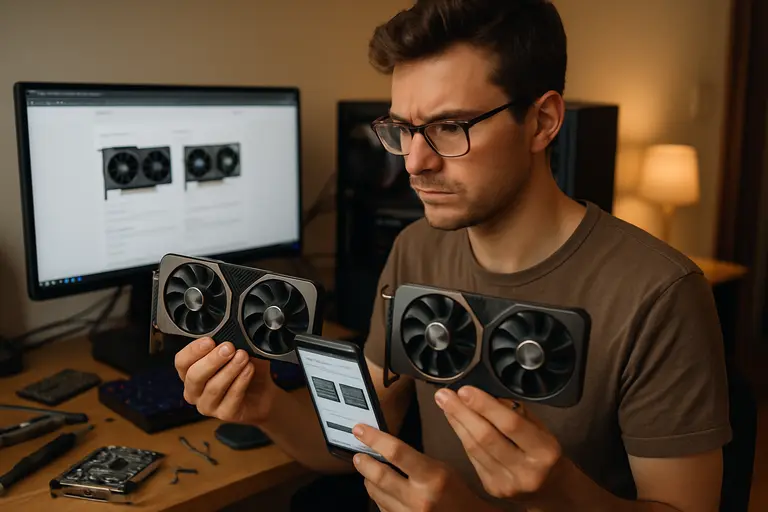
Use The Monitor As The Starting Point
The cleanest way to avoid overspending is to start with the monitor. A 1080p high-refresh build does not need the same GPU budget as a 1440p high-refresh build. A player with a standard 1080p panel may be better served by the RTX 5060 or an older alternative if the price is right. A buyer already using a 1440p display may find the RTX 5070 more appropriate, but only if the price does not crush the rest of the build.
For a wider RTX 50 buying framework, our RTX 50 buying guide covers timing, VRAM tradeoffs, and build balance across more cards. The same rule applies here: do not let the graphics card consume the whole budget unless the rest of the PC is already strong.
- Set a personal ceiling: Decide the maximum price before checking stock, not after seeing a low-inventory listing.
- Separate base cards from premium models: Large coolers and factory overclocks can add cost without changing the tier.
- Protect the PSU and case budget: A cramped, noisy, underpowered build is a poor trade for a slightly faster GPU.
- Watch rare promotions: Research notes mention occasional RTX 5070 deals near or under launch MSRP, but buyers should treat them as limited, not normal.
- Compare older and competing cards: AMD or previous-generation Nvidia options may be better value if the latest architecture is not required.
Do Not Treat MSRP As The Only Reference
MSRP is useful for understanding how far a product moved from its launch target, but it is not enough for a buying decision in late 2026. The better reference is the realistic price range for in-stock cards from reputable sellers. If the RTX 5070 is near $900 at median retail, a standard card under $600 would stand out in the research notes as unusually favorable. If the RTX 5060 is new around $350 to $450, it may be one of the stronger budget options, depending on warranty and local availability.
Premium RTX 5070 variants need special caution. Research notes mentioned some seller listings far above the launch MSRP, including very high-priced premium models. Those listings should not define the whole market, but they are a warning. A flashy cooler, factory clock, or rare variant can pull a buyer away from the point of a mid-range card: controlled cost.
RTX 5070 Prices And The 5060 Buying Call
For most mid-range buyers on October 21, 2026, the practical answer is patience with a price ceiling. The RTX 5070 can still make sense for a 1440p-focused build if it appears at a sane price from a reputable seller, but the August median data made it hard to recommend chasing inflated listings. The RTX 5060 is easier to justify for budget systems, yet it also needs discipline because new-card prices above the launch target can eat into the parts that make a PC feel good every day.
The safest route is to write the build backward from the display and games, then assign a GPU budget that leaves room for the rest of the system. If a deal fits that budget, act quickly. If it does not, wait, consider a used RTX 5060 with buyer protection, or compare alternatives. The mid-range card is supposed to keep the PC balanced. Once the GPU price breaks that balance, the better buy may be the card you skip.