
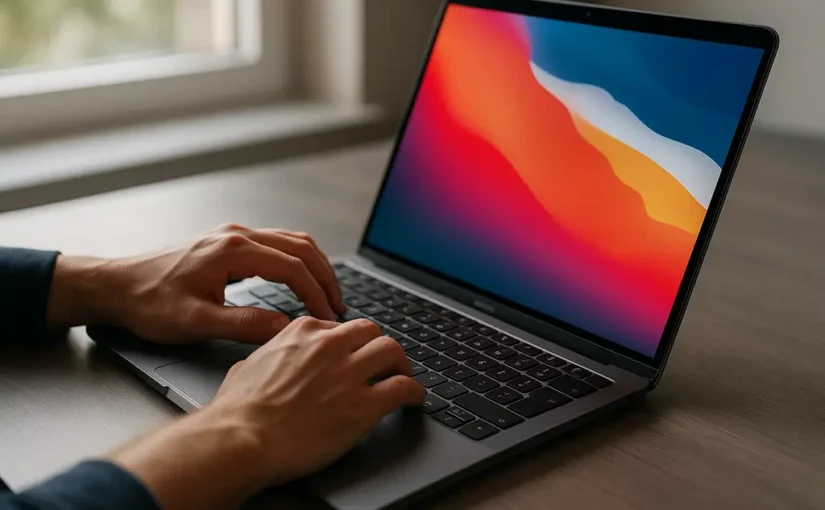
The Surface Laptop Ultra is one of the more unusual PC hardware announcements tied to Computex 2026 because it is not just a thinner Surface with a faster processor. The reported design centers on Nvidia’s RTX Spark Superchip, a 15-inch mini-LED PixelSense Ultra display, up to 128GB of unified LPDDR5X memory, and a port layout that looks closer to a creator laptop than a traditional Surface ultraportable. This is an on-paper review of the feature set, not a benchmark verdict, because independent testing, retail pricing, and real battery behavior still need confirmation.
What Makes The Surface Laptop Ultra Different
Most Surface laptops have been defined by clean industrial design, sharp displays, and restrained thermals. This model appears to push in a different direction. The headline is the Nvidia RTX Spark Superchip, which combines 20 Arm CPU cores with a Blackwell GPU carrying 6,144 CUDA cores and a rating of up to 1 petaflop of AI compute, according to Windows Central. That makes the machine less like a standard productivity notebook and more like a mobile AI workstation with Surface styling.
RTX Spark Is The Main Shift
The RTX Spark angle matters because it changes what buyers should compare this laptop against. A normal thin-and-light laptop is judged on CPU speed, battery life, display quality, fan noise, and portability. An RTX Spark system also has to be judged on local AI workloads, CUDA compatibility, Arm app support, game compatibility, and how well the cooling system handles a high-end integrated compute package. That is a much harder set of questions than, “Is this faster than last year’s Surface?”
Surface Laptop Ultra Specs That Matter
The most interesting Surface Laptop Ultra specs are not isolated numbers. The 20 Arm CPU cores, Blackwell GPU, unified memory pool, and high-bandwidth memory setup all point toward workloads that move data quickly between CPU, GPU, and AI tasks. For creators, that could matter in local model work, media projects, and heavy multitasking. For gamers, it raises a different question: how much of the Windows game library will feel natural on Arm hardware, and how much will depend on emulation quality?
Display, Memory, And Ports
The screen is another major break from past Surface expectations. The reported 15-inch mini-LED PixelSense Ultra panel has a 2880 x 1920 resolution, 262 pixels per inch, and peak HDR brightness of 2,000 nits. Windows Central describes it as the brightest display used in a Surface device to date. Those specs put the panel in creator territory, especially for users who care about bright HDR previews, dense text, and a taller workspace.
Mini-LED Targets Creator Work
A mini-LED display does not automatically make a laptop ideal for every creator, but this direction makes sense for the product Microsoft appears to be building. A 15-inch 3:2-style workspace is useful for editing timelines, coding windows, photo tools, documents, and browser-heavy research. Peak HDR brightness is only one part of image quality, and independent testing still needs to cover color accuracy, dimming behavior, blooming, uniformity, and battery impact. Even so, the display choice is clearly one of the key features separating this machine from mainstream Surface hardware.
Unified Memory Changes The Laptop Math
The memory setup may be the bigger story for AI and creative users. The laptop supports up to 128GB of unified LPDDR5X memory with 300 GB/s of bandwidth, as reported by Tom’s Hardware. Unified memory can be especially useful when large workloads need fast access from multiple compute blocks, though buyers should not treat capacity alone as a guarantee of speed in every app.
Microsoft’s reported local AI pitch is also aggressive: the machine is said to run 120-billion parameter AI models locally. That is the kind of claim that matters to developers, researchers, and AI-heavy creators who do not want every task tied to cloud processing. Still, real value will depend on software support, thermals, storage speed, model format, and how often users actually need that class of local processing.
Gaming And Arm Compatibility
Gaming is where the hardware story gets more complicated. The GPU side sounds serious, but PC gaming is not only about shader count or AI compute. It is about drivers, anti-cheat support, native builds, storefront behavior, controller support, frame pacing, and whether older x86 games behave correctly through translation. That is why the Surface Laptop Ultra should be viewed as promising but unproven for gamers until broad third-party testing arrives.
Native Arm Games Are The Easy Case
Windows Central reports support for native Arm versions of games such as Valorant and PUBG, along with improved emulation for x86 games. Native Arm support is the cleaner path because it reduces the translation layer that can create compatibility issues. If more competitive and mainstream games ship proper Arm builds, this class of hardware becomes more interesting for players who want a laptop that can handle work and play without carrying a separate gaming notebook.
To better understand how this may affect players, exploring resources like our network’s Hexiled Gaming can provide community and title-specific insights, while our earlier RTX Spark Arm gaming laptop analysis offers a broader perspective on Arm gaming laptops and x86 compatibility.
Emulation Still Needs Buyer Caution
Emulation is the part buyers should not gloss over. Improved x86 game emulation is useful, but “improved” does not mean every Windows game will run the same way it does on a conventional x86 gaming laptop. Anti-cheat systems, launchers, older middleware, and niche peripherals can all be trouble spots. If your library is built around a handful of specific games, the safe move is to wait for tested compatibility notes before treating this as a primary gaming machine.
- Native Arm games should be the first compatibility check.
- Anti-cheat-heavy multiplayer games need title-by-title confirmation.
- Creator apps should be checked for Arm-native builds or proven translation behavior.
- External monitor and capture workflows should be verified through the actual port layout.
Design Choices That Matter Day To Day

Spec sheets can make a laptop sound exciting, but daily use often comes down to simpler choices: ports, cooling, input devices, and noise. This is where the device looks more practical than some earlier Surface designs. The reported port selection includes HDMI, USB-C, USB-A, an SD card reader, and a headphone jack. For creators and gamers, that mix reduces the odds of needing a dongle for every desk setup.
Cooling And Touchpad Decisions
The dual-fan cooling system is another signal that Microsoft is not treating RTX Spark as a low-power add-on. Dual fans do not prove quiet operation or stable clocks by themselves, but they do show that thermal output is a major design concern. Independent reviews will need to check fan tone, chassis heat, sustained workloads, and how performance changes on battery versus wall power.
The large haptic touchpad is also worth noting. Windows laptops have improved here, but Surface devices have often used input quality as part of their premium pitch. The reported largest-ever haptic touchpad on a Surface should help with gestures, timeline scrubbing, large documents, and general navigation, assuming palm rejection and click tuning are handled well.
Port Selection Looks More Practical
The return of practical ports matters because this is not a laptop aimed only at email and browser tabs. HDMI helps with monitors and projectors. USB-A still matters for older peripherals, audio gear, and dongles. An SD card reader is useful for camera workflows. A headphone jack remains relevant for editing, gaming chat, and low-latency monitoring. These choices make the machine feel less like a minimalist concept and more like a work system for people who plug things in.
| Feature | Why It Matters | What Still Needs Testing |
|---|---|---|
| RTX Spark Superchip | Combines Arm CPU cores with Blackwell GPU compute | Real app speed, thermals, driver behavior |
| 128GB Unified Memory | Targets large AI and creator workloads | Workload scaling and battery impact |
| Mini-LED Display | High-resolution 15-inch panel with strong HDR claim | Color, dimming, uniformity, power draw |
| Expanded Ports | Reduces adapter dependence for creators | Port speeds and external display behavior |
Surface Laptop Ultra Buying Fit
The Surface Laptop Ultra makes the most sense for a narrow but important buyer: someone who wants a high-end Windows laptop for local AI work, creative tools, portable development, and some gaming, while accepting the risk that Arm software support still needs close inspection. It is less clear as a buy for players who only want the safest path to a large Steam library, or for users who need maximum battery life above all else.
The unique feature set is real: RTX Spark, up to 128GB unified memory, a bright mini-LED PixelSense Ultra display, more practical ports, dual-fan cooling, and a large haptic touchpad. The open questions are just as real. Until independent reviews test performance, noise, compatibility, battery life, and pricing, this should be treated as one of the most interesting high-end Windows laptop designs of Computex 2026 rather than a guaranteed replacement for every creator laptop or gaming notebook.