
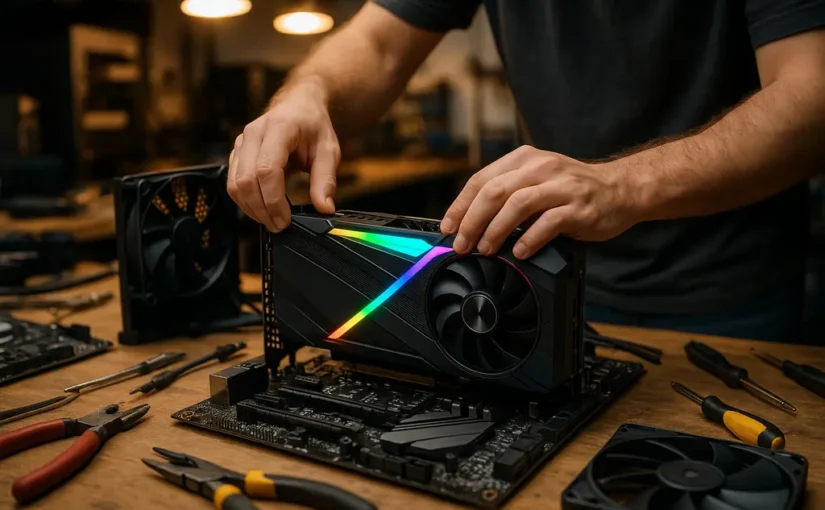
A budget PC build in 2026 needs a colder parts-list mindset than the same project did a few years ago. Rising component prices mean the usual advice of “just wait for a sale” is not enough on its own. The safer plan is to decide which parts affect the gaming experience most, which parts can be reused, and which newer standards are worth paying for right now. That does not mean buying the cheapest version of every component. It means protecting the parts that matter, avoiding upgrades that do not change how you play, and checking every price against the whole system instead of one flashy component.
The pressure is not limited to one category. RAM pricing, GPU availability, storage deals, motherboard choices, and prebuilt discounts can all shift the value of a parts list. If you are building for games rather than workstation loads, the goal should be practical: spend where it affects your display target, save where the difference is mostly branding, and leave enough headroom that the PC does not become annoying to upgrade later. For readers making comparisons between hardware plans and their actual gaming sessions, the platform at MostPlays demonstrates that not every fun experience requires a high-end rig.
Set The Budget PC Build Around The GPU
The graphics card is still the part most likely to define a gaming system’s ceiling. That is why a parts list should start with the monitor target and the GPU tier, then work backward into the CPU, case, power supply, cooling, and storage. BuildYourOwnComputerPlan recommends allocating 35–45% of the hardware budget to the GPU in a gaming-focused build, because the graphics card has the largest effect on gaming performance in most setups budget PC strategy. Treat that range as a planning tool, not a fixed law. A small-form-factor build, a creator-gaming hybrid, or a system built around reused parts may land outside it.
Budget PC Build GPU Share
For a budget PC build, the GPU share matters because every overpay creates a cut somewhere else. Spending too much on the graphics card can push you into a weaker power supply, a cramped case, a smaller SSD, or a motherboard with fewer upgrade options. Spending too little can make the system feel outdated sooner if your monitor target is too demanding. The right answer depends on whether you play at 1080p, 1440p, ultrawide, or 4K, and whether your games are esports titles, visual-heavy single-player games, or a mix.
A sensible parts list should include a ceiling price for the target GPU and a fallback card before shopping starts. If the target card jumps above the limit, do not automatically gut the rest of the system. A balanced PC with a slightly lower graphics tier may age better than a machine with one expensive card and support parts chosen in panic. This is the same pressure covered in our recent look at gaming hardware prices, where the smartest move was not always buying faster hardware, but buying at the right moment for the whole setup.
Use DDR4 To Keep A Budget PC Build Practical
Memory is one of the clearest places where builders can avoid paying for a newer label that may not fit the budget. Tom’s Hardware has argued that, with high DDR5 prices, a DDR4-based PC is worth considering in 2026, especially if you can carry over RAM from an older system DDR4 build options. That point is useful because many buyers over-focus on having the newest memory standard and under-check whether the total platform cost still makes sense.
Reuse RAM Before Rebuying It
A budget PC build does not have to start from an empty desk. If you already own working DDR4 memory, a usable case, SATA SSDs, case fans, or a quality power supply, those parts can reduce the amount of cash tied up in the platform. The big warning is condition and compatibility. Do not reuse a mystery power supply just because it turns on. Check wattage needs, connectors, age, warranty status, and whether the unit is suitable for the GPU you plan to run. The same logic applies to storage: an older SSD can hold a secondary game library, while the main drive can be chosen for the operating system and current titles.
DDR4 also changes motherboard and CPU choices. Staying on an older memory standard may limit some newer platform features, but it can free money for the graphics card, monitor, or a better case. That trade can be rational if the PC is built for gaming value rather than feature collecting. Buyers planning a very long platform life may still prefer newer parts, but anyone trying to control the initial spend should run both DDR4 and DDR5 parts lists before deciding.
Track Prices Before You Buy Parts
Rising prices make timing more valuable, but timing should be managed with numbers rather than vibes. Price trackers, retailer wishlists, and parts-list tools can help show whether a component is actually discounted or just wearing a sale badge. The useful habit is to watch a few target parts for several weeks, set alerts, and compare the final cart total instead of celebrating one discounted component.
Watch The Whole Cart
One common mistake is buying a single component because it looks cheap, then discovering that the matching motherboard, cooler, or memory costs more than expected. A CPU deal is not a deal if the board needed to support it wipes out the savings. A discounted case is not ideal if it forces a worse cooler fit or awkward cable management. A cheap SSD may be fine for a secondary drive, but the main drive should still match your capacity and reliability needs.
| Choice | Why It Helps | Main Check Before Buying |
|---|---|---|
| Set GPU ceiling first | Keeps the biggest gaming spend under control | Monitor target and fallback card |
| Consider DDR4 | Can lower platform cost if prices favor it | CPU and motherboard compatibility |
| Reuse safe parts | Reduces cash needed upfront | Age, condition, connectors, warranty |
| Track prices | Helps avoid fake-looking discounts | Full cart cost, not one part |
| Compare prebuilts | Bulk buying can sometimes help value | PSU, motherboard, cooling, RAM layout |
Decide What To Reuse, Replace, Or Buy Prebuilt

Prebuilt systems deserve a fair look during price spikes. System builders may have access to bulk purchasing or bundles that make a complete machine competitive with a custom parts list. That does not make every prebuilt a smart buy. The risk is usually in the less-visible parts: the power supply model, motherboard quality, cooling layout, RAM configuration, and case airflow. A good prebuilt should disclose enough detail that you can judge the system beyond the CPU and GPU names.
Custom building still has strong advantages. You choose the exact case, cooler, power supply, storage setup, and upgrade path. You can also reuse parts more easily. If a prebuilt hides too much information, includes weak support components, or blocks simple upgrades, the upfront discount may not be worth it. If it uses sensible parts and costs less than the equivalent cart, it can be a practical shortcut.
That is why a budget PC build can make sense in either form. The key is not custom versus prebuilt as an identity choice. The key is proof. Can you verify the parts? Can you replace or upgrade them later? Does the system fit the games, display, and noise level you care about? If the answer is yes, the format matters less.
Choose Parts By Risk, Not Brand Hype
Alternative brands can be worth considering, especially for cases, fans, memory kits, SSDs, and power supplies, but the cheaper option should still earn the slot. Compare published specifications, warranty terms, connector support, physical dimensions, and reputable reviews where available. For power supplies, cooling, and storage, the cost of a bad choice can be higher than the amount saved. Cheap is useful only if the part is fit for purpose.
- Do not cut the power supply below what the GPU and future upgrades reasonably need.
- Do not buy a case without checking GPU length, cooler clearance, and airflow layout.
- Do not pay extra for motherboard features you will never use.
- Do not shrink storage so far that game management becomes a weekly chore.
- Do not assume a famous brand part is better without checking the exact model.
Setup goals should guide the tradeoffs. A quiet living-room PC, a compact desk system, and a high-refresh competitive rig do not need the same case or cooling choices. If style is part of the plan, keep it in the budget from the start rather than stealing money from the power supply or GPU at the end. Our battle stations under $1,500 piece takes the same angle: a good gaming setup is resource allocation, not a pile of expensive parts.
Building PCs Amid Rising Component Prices
Building PCs during price increases rewards patience, but not passive waiting. The stronger move is to prepare two or three parts lists, track real cart totals, and decide in advance which compromises are acceptable. DDR4 may be the right call if it protects the GPU budget. A prebuilt may be the right call if the parts are clear and the price beats a custom cart. Reused parts may be the right call if they are safe, compatible, and still useful.
For a budget PC build, the winning strategy is boring in the best way: define the gaming target, protect the GPU spend, check DDR4 versus DDR5 platform cost, reuse what you can trust, and avoid paying for features that will not change your play. Component prices may keep moving, and no parts list is safe from local availability swings. A buyer who plans around tradeoffs instead of hype has a better shot at ending up with a PC that feels balanced, upgradeable, and worth the money.