
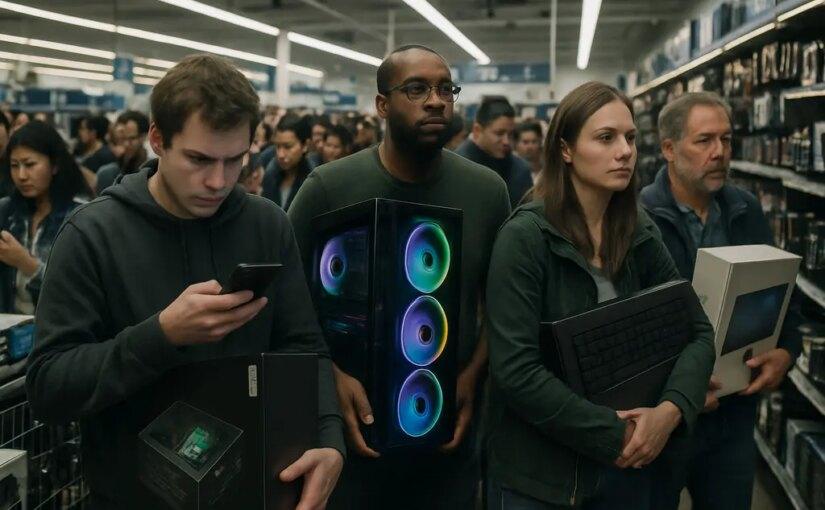
The phrase panic buying hardware sounds dramatic, but the behavior behind it is easy to understand in September 2026. Gamers are seeing graphics cards ship in unusually high numbers, console prices climb, and memory costs show up in places that used to feel disconnected from PC builds and living-room systems. The fear is not just that one GPU or console gets expensive. The fear is that waiting could make the next upgrade worse.
That does not mean every buyer should rush to checkout. It does mean the old advice of “wait for prices to settle” is harder to trust. PC gamers, console players, streamers, and parents buying systems for holiday gifts are all dealing with the same question: is it smarter to buy before the next increase, or hold cash and risk a thinner shelf?
Why Panic Buying Hardware Is Spreading
Panic Buying Hardware Is A Budget Reaction
Panic buying hardware is not only about hype or fear of missing out. It is a defensive move from buyers who have watched GPUs, consoles, RAM, and storage become more sensitive to supply pressure. The most practical shopper is not trying to own the newest part at any cost. They are trying to avoid paying more for the same class of hardware later.
That matters because gaming hardware upgrades are rarely single-item decisions. A graphics card can change the power supply target. A new console can change controller, storage, and subscription spending. A GPU bought for 1440p play can also force a monitor decision. Once the anchor item rises, the whole budget shifts.
The GPU Signal Is Hard To Ignore
The strongest PC-side signal came from the graphics-card market. In Q2 2026, desktop discrete GPU shipments reached 12.5 million units, the highest level since Q1 2022, while Nvidia held about 90% market share for the period, according to Tom’s Hardware. The key detail is that shipments rose despite increasing prices. That suggests many buyers were not waiting for relief; they were buying ahead of expected increases.
This is where the market feels different from a normal upgrade cycle. A gamer replacing an aging GPU may not be comparing today’s price with launch MSRP. They may be comparing today’s price with the fear of a worse October or November shelf. That psychology can move demand forward, which can leave later buyers facing less choice if inventory tightens.
Console Prices Made The Fear More Visible
A $542 Average Changes The Living-Room Math
Console buyers are seeing the same pressure in a more visible form. In July 2026, the average U.S. console price reached $542, up 16% year over year, while unit sales fell 39%, according to Day Lila. The report tied part of the pressure to shortages of RAM and storage components, the same categories that also shape PC parts and handheld gaming devices.
That $542 figure changes the value conversation. A console used to be the simpler answer for players priced out of PC gaming. It still can be, depending on the library, subscription use, household setup, and resale plans. But if console hardware climbs while games, storage expansions, and controllers remain part of the real ownership cost, the easy “just buy a console” answer is less automatic.
Why AI Demand Reaches The Game Shelf
The pressure is not coming only from gamers. The research notes point to AI data-center demand as a major source of strain on memory and storage supply. For players, the frustrating part is that the competing buyer is not another person building a PC; it may be a data center buying at a scale consumers cannot match.
That is why the price pressure feels broad. DRAM and storage are not niche parts. They touch consoles, graphics cards, laptops, handhelds, mini PCs, prebuilts, and DIY builds. A buyer who planned to dodge GPU pricing by buying a console may still run into memory-driven cost increases. A buyer who planned a cheaper PC build may find RAM and SSD pricing harder to ignore.
What Buyers Should Do Before They Join The Rush
Set A Personal Ceiling First
The smartest response to panic buying hardware is to set a hard price ceiling before opening retailer tabs. That ceiling should be tied to the job the hardware must do, not to fear. For a 1080p player, the ceiling may be much lower than for someone targeting high-refresh 1440p. For a console buyer, the ceiling should include the system, required storage, controllers, and the first wave of games or subscription costs.
Write down three numbers: the target price, the walk-away price, and the “buy now” price. If the product is below the buy-now number and fits the use case, the purchase can be sensible. If it is above the walk-away number, the market is making the decision for you. That keeps a price spike from turning into a panic tax.
Protect The Whole Build
Before panic buying hardware, PC builders should check whether the purchase damages the rest of the system. A graphics card that consumes the budget can force compromises on the power supply, case airflow, CPU cooling, motherboard, or storage. Those parts may not create flashy spec-sheet bragging rights, but they shape noise, stability, upgrade room, and day-to-day quality.
For readers weighing a full parts list, our related piece on rising GPU prices covers why graphics-card inflation can reshape the entire build. For a wider player-culture angle from the same network, you can explore insights on how gaming communities adapt through Hexiled Gaming.
The Hardware Panic Buy Checklist

Good Reasons To Buy Now
Buying early can make sense, but only under specific conditions. The decision should be based on confirmed needs, real local pricing, and parts that are actually in stock from a seller you trust.
- Your current GPU, console, or PC is failing, unsupported, or no longer fit for the games you actually play.
- The hardware is available at a price you already decided was fair before the latest scare.
- You are buying for a fixed deadline, such as a birthday, school move, LAN event, or holiday gift window.
- The purchase does not force weak support parts, such as an undersized power supply or too little storage.
Reasons To Wait
Waiting still has value if the purchase is emotional rather than practical. A buyer who already owns a working PC or console has more power than a buyer starting from nothing. That existing hardware is leverage against bad pricing, as long as it still does the job.
- You are upgrading only because prices might rise, not because the current setup is limiting your play.
- The model you want is being sold only by high-priced third-party sellers or low-trust storefronts.
- A lower-cost tier would meet your display target, but fear is pushing you higher.
- You have not checked the total platform cost, including storage, power, cooling, and accessories.
Panic Buying Hardware And The 2026 Upgrade Window
The 2026 upgrade window rewards buyers who separate urgency from pressure. The hard data shows real stress: GPU shipments rose sharply in Q2 2026 even as prices increased, and U.S. console pricing was up in July 2026 while unit sales dropped. Those are not imaginary signals. They explain why shoppers are moving early.
Still, panic buying hardware is not automatically smart. It can protect a buyer from a later increase, but it can also lock in a weak value if the product is overpriced, mismatched, or bought from a poor seller. The best move is to define the gaming target first: 1080p, 1440p, 4K, handheld, couch play, esports, or shared family system. Then price the hardware around that target instead of chasing the market’s mood.
For PC gamers, that means protecting the whole build. For console buyers, it means pricing the full setup rather than only the box. For everyone, it means treating September 2026 hardware shopping as a planning problem, not a race. The market is giving buyers reasons to act, but the winner is still the person who buys the right device at a price they can defend after the fear fades.